Trat is Thailand’s easternmost coastal province, tucked against the Cambodian border at the far end of the Gulf. It is best known as the gateway to Ko Chang, the country’s third-largest island, and to the quieter islands of Ko Kut, Ko Mak and Ko Wai beyond it, all part of a marine national park with clear water and forested hills. On the mainland, the small provincial capital has canal-side wooden houses and a famously good night market, while fishing communities like Ban Nam Chiao show a gentle, unhurried side of eastern Thailand.
- Region: Eastern Thailand, bordering Cambodia
- Best time: November to April; May to October is very wet
- How long: 3–6 days, depending on how many islands you visit
- Nearest airport: Trat (TDX), with flights from Bangkok
Getting there and getting around
Trat town is about five hours from Bangkok by bus or car, and flights from Bangkok to Trat airport take roughly an hour. Car ferries to Ko Chang run from the Ao Thammachat and Centrepoint piers in Laem Ngop district, about 30 minutes from town; the crossing takes 30–45 minutes, with the last boats in the early evening. Speedboats to Ko Kut, Ko Mak and Ko Wai leave from piers in Laem Ngop and Laem Sok, mainly in the dry season, and inter-island boats link Ko Chang with the smaller islands. On Ko Chang, shared songthaews run along the west coast; elsewhere, hire a scooter only if you are confident on steep, winding roads.
Top things to do in Trat
1. Ko Chang’s west-coast beaches
White Sand Beach (Hat Sai Khao) is the liveliest, Klong Prao and Kai Bae are wide and family-friendly, and Lonely Beach draws a younger crowd. All face west for sunsets over the sea, with jungle-covered mountains rising behind. Map.
2. Bang Bao fishing village
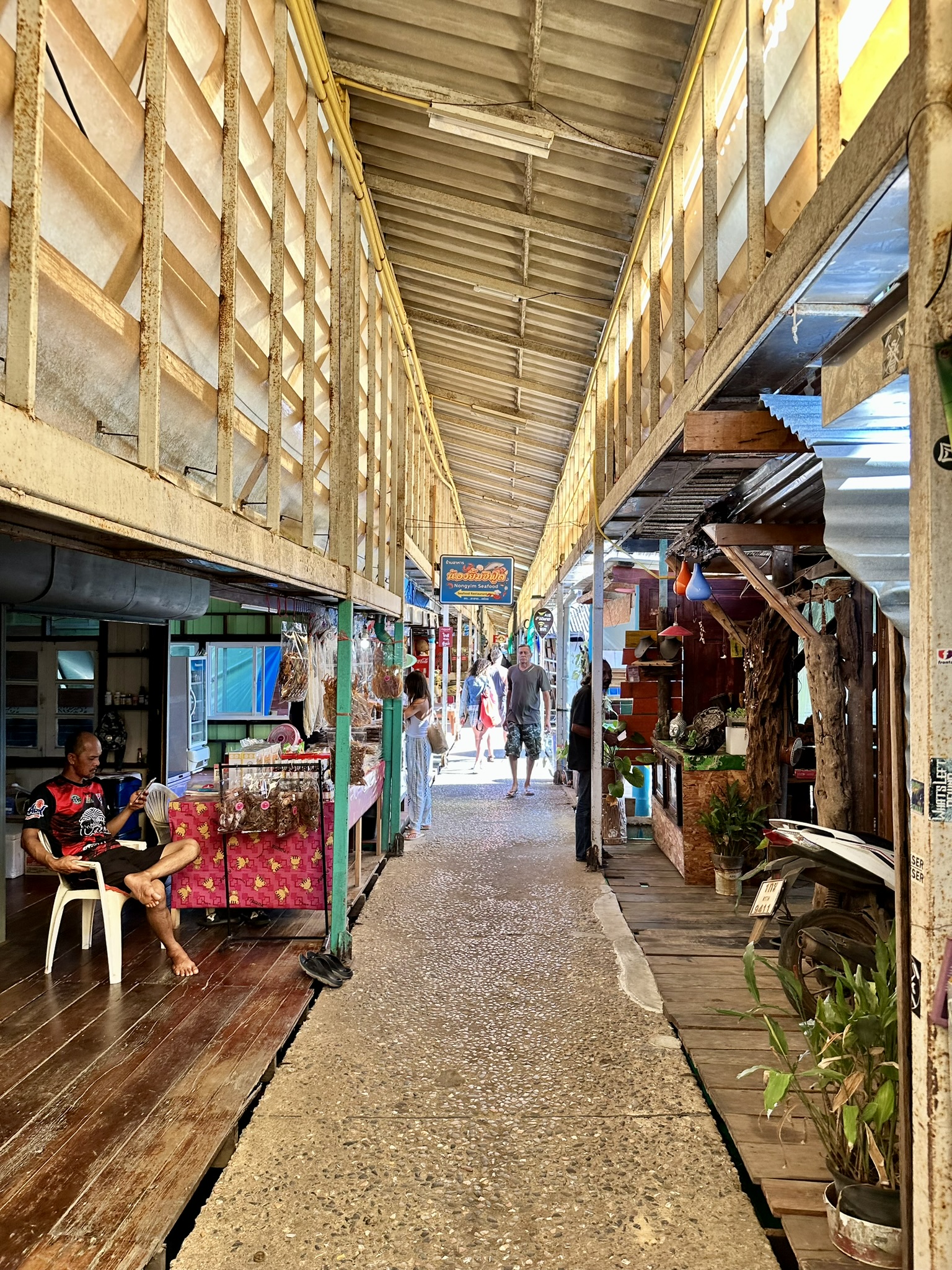
A long pier on stilts at the southern end of Ko Chang is lined with seafood restaurants, souvenir shops and guesthouses, and is the departure point for many snorkelling trips. Map.
3. Ko Chang’s waterfalls
Khlong Phlu waterfall, inside Mu Ko Chang National Park, drops into a deep pool perfect for a swim. On the east coast, Than Mayom waterfall has rocks inscribed with the royal initials of King Chulalongkorn and later kings who visited. A park fee applies. Map.
4. Salak Phet and the mangroves
The quiet south-east of Ko Chang is a world away from the beach resorts: a traditional fishing village, mangrove boardwalks and kayak routes through calm channels. Map.
5. Snorkelling the southern islands
Day trips from Ko Chang visit small islands to the south with coral reefs and clear water, including the Ko Rang group within the national park. Calm seas from about December to April give the best visibility. Map.
6. Ko Kut
One of Thailand’s largest islands yet still remarkably undeveloped, Ko Kut has clear turquoise bays, the tiered Khlong Chao waterfall and a slow pace that suits a few lazy days. Map.
7. Ko Mak and Ko Wai
Flat, palm-covered Ko Mak is ideal for cycling between quiet beaches, while tiny Ko Wai has some of the best snorkelling just off its shore. Both are easy stops on island-hopping boats in the dry season. Map.
8. Trat town and the Bang Phra canal
The provincial capital is small and friendly. Wander the old wooden houses along the Bang Phra canal and Thana Charoen Road, visit the Trat Museum in the former city hall, and save an evening for the night market. Map.
9. Wat Buppharam
A short walk west of the centre, this temple founded in the 17th century is one of the oldest in eastern Thailand, with wooden buildings and old murals in a peaceful setting. Map.
10. Ban Nam Chiao
A fishing community where Buddhist and Muslim families live side by side among the mangroves, known for hand-woven ngop farmer’s hats made from nipa palm and for khao kriap ya na, a local rice-cracker snack. Community-run boat trips explore the mangroves. Map.
11. The Ko Chang naval battle memorial
At Laem Ngop, a memorial and small exhibition remember the Thai sailors who fought the French navy off Ko Chang on 17 January 1941, one of the most significant naval battles in Thai history. Map.
A two-day route
Day 1 – Trat town and the coast: Wat Buppharam and the canal-side old town in the morning, Ban Nam Chiao and its mangroves after lunch, then dinner at the Trat night market.
Day 2 – Ko Chang: Take an early ferry to Ko Chang, swim at Khlong Phlu waterfall, relax on Klong Prao or Kai Bae beach, and finish with seafood on the pier at Bang Bao. With more time, spend two or three nights on Ko Kut or Ko Mak.
Festivals and events in Trat
- Trat Day (around 23 March): A week-long fair marks the day in 1907 when Trat returned to Thai rule after a period under France, with ceremonies, local products and performances in town.
- Naval Battle of Ko Chang commemoration (17 January): Ceremonies at the Laem Ngop memorial honour the sailors who fell in 1941.
- Songkran (13–15 April): Water play along Ko Chang’s west coast and in Trat town, with merit-making at temples. Read our Songkran etiquette and survival guide before joining in.
- Fruit season and fruit fairs (around May–June): Trat’s durian, mangosteen, rambutan and salak ripen early in the season, and fruit fairs are held in the province most years.
- Loy Krathong (November full moon): Floats on the Bang Phra canal in town and on the island beaches.
Dates change each year; check with the Tourism Authority of Thailand’s Trat office before you travel.
Practical tips
- Trat is one of the wettest provinces in Thailand. From May to October expect heavy rain; many resorts on Ko Kut and Ko Mak close or reduce services and speedboats run less often.
- Ko Chang’s mountain roads are steep with sharp bends; many visitors are injured on scooters every year.
- ATMs are limited on the smaller islands; bring enough cash.
- Thai–Cambodian border crossings, including Hat Lek, have been closed for long periods since 2025. Check the latest official information before planning an overland crossing.
- Use insect repellent at dawn and dusk to deal with sandflies and mosquitoes.
Frequently asked questions
How do I get to Ko Chang?
Travel to Trat by bus or plane, then take a car ferry from Ao Thammachat or Centrepoint pier in Laem Ngop. The crossing takes 30–45 minutes.
When is the best time to visit Trat’s islands?
November to April, when the sea is calm and clear. Ko Chang stays open all year, but smaller islands are much quieter in the rainy season.
Ko Chang, Ko Kut or Ko Mak?
Ko Chang has the most choice of hotels, restaurants and activities; Ko Kut is best for peaceful, clear-water beaches; Ko Mak suits cyclists and travellers looking for a small, friendly island.
Is Trat town worth a stop?
Yes. Even one night lets you enjoy its old canal-side streets and one of the best night markets in eastern Thailand.
More eastern Thailand guides
Cover photo: Bang Bao Pier, Koh Chang.jpg · Slyronit · CC BY-SA 4.0 · Wikimedia Commons