Surat Thani is the largest province in southern Thailand and the gateway to the Gulf islands. Most travellers pass through on the way to Ko Samui, Ko Phangan or Ko Tao, but the mainland deserves time too: Khao Sok’s ancient rainforest and the limestone islands of Cheow Lan Lake, the 42-island Ang Thong National Marine Park, and the old Srivijaya-era town of Chaiya, home to one of the most revered chedis in the south. Add some of Thailand’s best oysters and a lively riverside provincial capital, and Surat Thani easily fills a week.
- Region: Southern Thailand, Gulf of Thailand coast
- Best time: February to August for the islands; Khao Sok is good year-round
- How long: 4–7 days for islands plus mainland
- Airports: Surat Thani (URT) and Samui (USM)
Getting there and getting around
Flights from Bangkok to Surat Thani airport take about 1 hour 10 minutes, and Samui’s small airport has direct flights from Bangkok and several regional cities. Overnight trains from Bangkok stop at Surat Thani station in Phun Phin, about 14 km from the town centre. Car and passenger ferries to Ko Samui and Ko Phangan leave from Don Sak pier, around an hour’s drive east of town; the crossing to Samui takes roughly 1.5 hours. High-speed catamarans also link Chumphon with Ko Tao, Ko Phangan and Ko Samui. Khao Sok is about two hours by road from Surat Thani town, with minivans from the airport and the bus station.
Top things to do in Surat Thani
1. Ko Samui’s beaches
Thailand’s second-largest island offers something for every style of trip: busy Chaweng with its long white beach and nightlife, livelier-but-smaller Lamai, the calm bays of Maenam and Bophut in the north, and quieter coves in the south and west. Map.
2. Big Buddha and Wat Plai Laem
The 12-metre golden Buddha of Wat Phra Yai sits on a small islet joined to the north-east coast by a causeway, while nearby Wat Plai Laem has a striking eighteen-armed statue of Guan Yin standing in a lake. Visit together in the late afternoon. Map.
3. Fisherman’s Village, Bophut
Old wooden Chinese shophouses along the beach now hold restaurants, cafés and boutiques. On Friday evenings the street becomes a walking street market packed with food stalls. Map.
4. Na Muang waterfalls and Hin Ta Hin Yai
Na Muang 1 and 2 are the easiest jungle waterfalls to reach on Samui, with a swimming pool at the foot of the first. On the south coast, the “grandfather and grandmother” rocks of Hin Ta Hin Yai are a quirky, much-photographed stop. Map.
5. Ang Thong National Marine Park
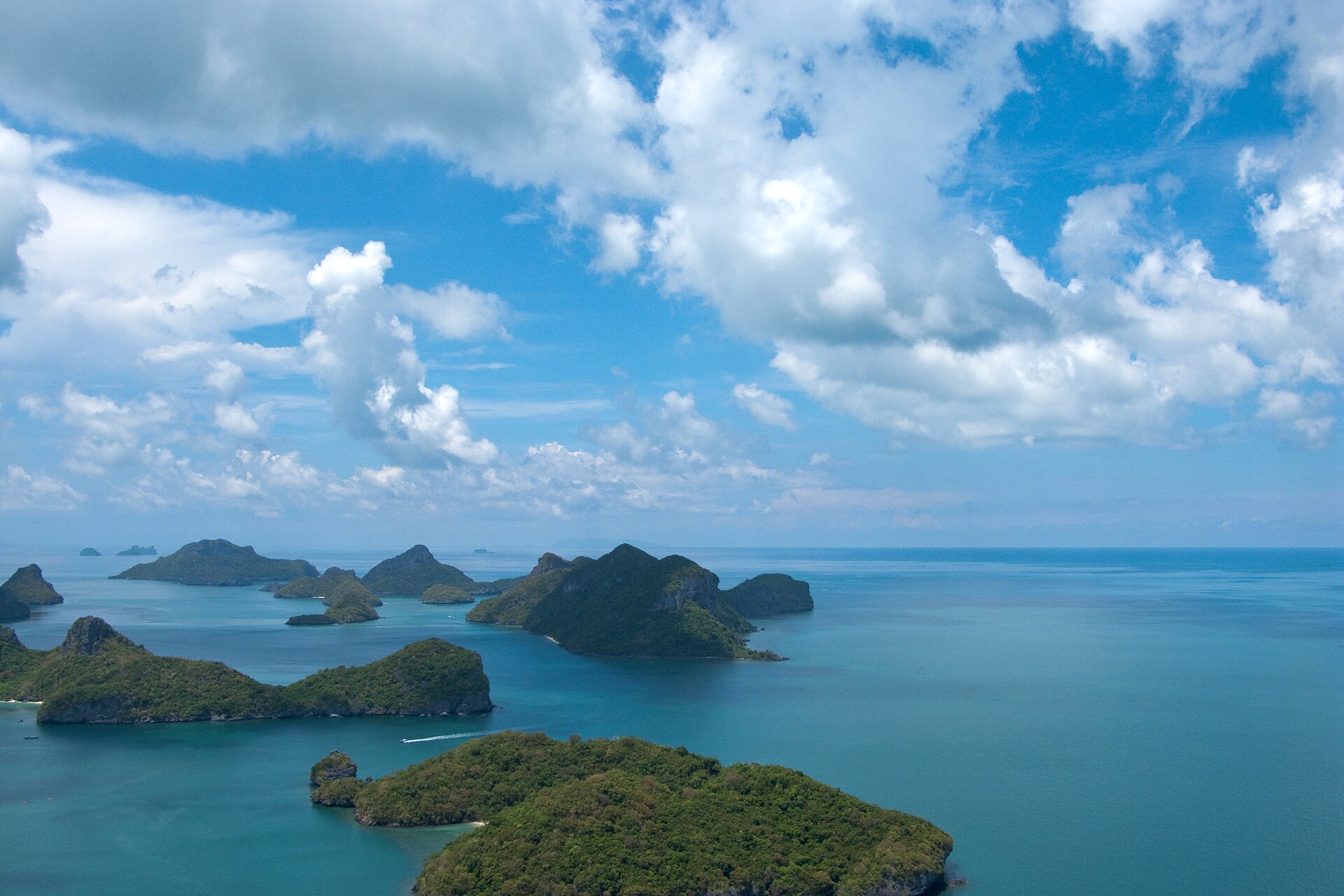
A cluster of 42 jungle-covered limestone islands west of Samui, reached on full-day boat trips. Highlights are the steep climb to the viewpoint on Ko Wua Talap and the green saltwater lagoon inside Ko Mae Ko. The park may close for part of the north-east monsoon, roughly November–December. Map.
6. Ko Phangan
Famous for the monthly Full Moon Party at Haad Rin, Phangan is also an island of yoga retreats, jungle waterfalls such as Than Sadet and beautiful northern bays like Thong Nai Pan. Outside party nights it is surprisingly relaxed. Map.
7. Ko Tao and Ko Nang Yuan
Ko Tao is one of the world’s most popular places to learn to dive, with calm, warm water and dive schools at every price level. Just off its north-west coast, the three islets of Ko Nang Yuan are joined by a sandbar and topped by a well-known viewpoint; a landing fee applies. Map.
8. Khao Sok National Park
One of Thailand’s most spectacular rainforests, with limestone cliffs, rivers for tubing and canoeing, and night safaris for spotting wildlife. Lucky visitors in the dry season may see the giant Rafflesia flower in bloom. Map.
9. Cheow Lan Lake
Created by the Ratchaprapha Dam, this emerald lake is framed by towering karst peaks. Long-tail boat trips visit caves and viewpoints, and an overnight stay in a floating raft house is one of the most memorable experiences in southern Thailand. Book raft houses ahead in high season. Map.
10. Chaiya: Wat Phra Borommathat and Suan Mokkh
Chaiya was an important centre of the Srivijaya kingdom, and its brick chedi at Wat Phra Borommathat Chaiya is one of the most sacred sites in the south. Nearby Suan Mokkh, founded by the influential monk Buddhadasa Bhikkhu, is a peaceful forest monastery that also runs meditation retreats. Map.
11. Surat Thani town and the Tapi River
The provincial capital is a working town rather than a resort, which is its charm. Stroll the riverside promenade along the Tapi at sunset, eat at the night market, and try the town’s famous breakfast shops before heading to the piers. Map.
A sample two-to-three-day plan
Day 1 – Ko Samui: Big Buddha and Wat Plai Laem in the morning, Na Muang waterfall and Hin Ta Hin Yai after lunch, then Fisherman’s Village for dinner (best on a Friday).
Day 2 – Ang Thong: Full-day boat trip from Samui with kayaking, the Ko Wua Talap viewpoint and the inner lagoon of Ko Mae Ko.
Day 3 – Khao Sok: Return to the mainland and head for Khao Sok for a night on Cheow Lan Lake; stop in Chaiya on the way if you have time.
Festivals and events in Surat Thani
- Chak Phra and Tak Bat Thewo (end of Buddhist Lent, usually October): Surat Thani’s signature festival. Buddha images ride on elaborately decorated floats through town and on boats along the Tapi River, accompanied by long-boat races and a dawn alms-giving.
- Rambutan Fair (usually August): Celebrates the province’s famous Rong Rian rambutan with fruit contests, decorated floats and market stalls.
- Songkran (13–15 April): Water fights fill Chaweng and Lamai on Samui and the main streets of Surat Thani town. Read the Songkran etiquette and survival guide before you join in.
- Full Moon Party (monthly): Haad Rin on Ko Phangan hosts its famous beach party around each full moon; dates shift if they clash with Buddhist holidays.
- Loy Krathong (November full moon): Candle-lit floats on the Tapi River and on island beaches.
Dates follow the lunar calendar, so check the Tourism Authority of Thailand’s event listings before you travel.
Practical tips
- The Gulf islands have a different rainy season from Phuket and Krabi: the wettest months are usually October to December.
- Ferries may be cancelled in rough weather; leave a buffer day before an international flight.
- At the Full Moon Party, watch your drink, keep valuables at your accommodation and avoid riding a scooter afterwards.
- Khao Sok is humid and leeches appear after rain; bring light long sleeves and leech socks.
- National parks charge separate entry fees for Thai and foreign visitors; carry cash.
Frequently asked questions
Is Khao Sok in Surat Thani province?
Yes. Khao Sok National Park and Cheow Lan Lake are in the west of Surat Thani province, about two hours from Surat Thani town.
How do I get from Surat Thani to Ko Samui?
Take a bus or minivan to Don Sak pier and a ferry across (about 1.5 hours), or buy a combined bus-and-boat ticket at the airport or train station.
When is the best time to visit the Gulf islands?
February to August usually brings the best weather. October to December is the wettest period.
Ko Samui, Ko Phangan or Ko Tao?
Samui suits families and comfort-seekers, Phangan suits yoga lovers and partygoers, and Tao is best for divers and snorkellers.
On King Taksin’s trail
King Taksin’s campaigns passed through this province: The campaign against the Nakhon Si Thammarat faction. The full story with maps is on our King Taksin trail site (in Thai).
More southern Thailand guides
- Surat Thani food guide: oysters, salted eggs and where to eat
- Krabi travel guide
- Phuket travel guide
Cover photo: Mu Ko Ang Thong National Park, Islands, Thailand.jpg · Vyacheslav Argenberg · CC BY 4.0 · Wikimedia Commons