Food in Chiang Rai tastes of the mountains: herb-heavy northern Thai cooking, Shan and Burmese curries brought across the border, and Yunnanese dishes from the Chinese villages on the ridges. It is less sweet than central Thai food, often more bitter and herbal, and best eaten with sticky rice rolled in your fingers. This guide covers the dishes worth seeking out, where to find them, and how to eat like a local in Thailand’s northernmost province.
Dishes to try in Chiang Rai
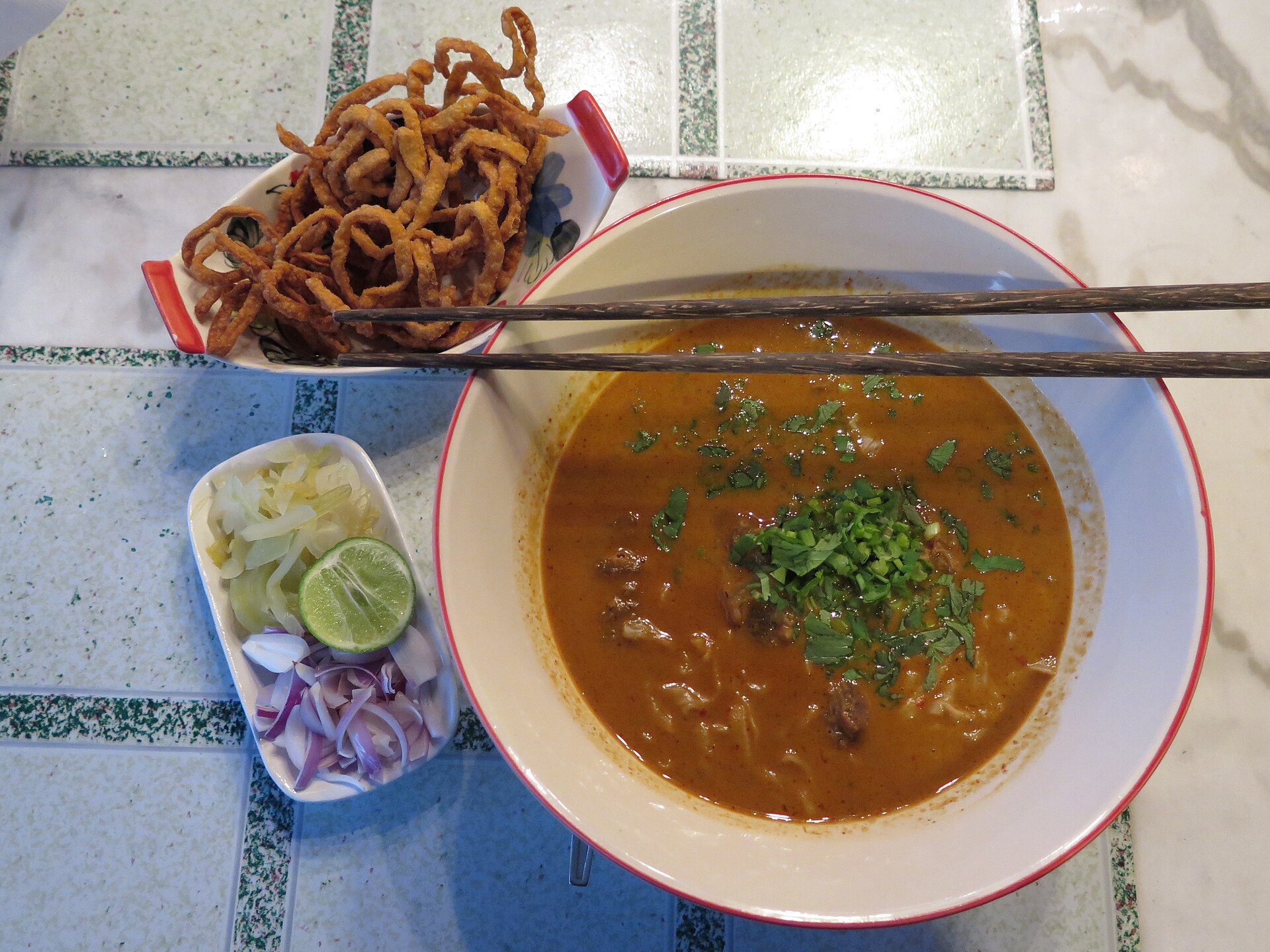
Khao soi
The north’s famous curry noodle soup: egg noodles in a coconut-rich curry broth with chicken or beef, topped with crispy fried noodles and served with pickled mustard greens, shallots and lime. Every shop has its own balance of spice and creaminess, so try more than one.
Khanom jeen nam ngiao
Fresh rice noodles in a tangy tomato and pork broth flavoured with dried kapok flowers, often with cubes of pork blood. This Shan-influenced dish is a Chiang Rai breakfast and lunch staple and many shops sell out by mid-afternoon.
Larb muang
Northern-style larb is very different from the Isan version: minced pork or beef seasoned with a dry spice mix of long pepper, prickly ash and dried chillies, eaten with a basket of bitter and aromatic herbs. Order it suk (cooked) unless you are sure of the kitchen’s hygiene.
Sai ua
A coarse pork sausage packed with lemongrass, kaffir lime, turmeric and chilli, grilled over charcoal. You will smell it before you see it at every market.
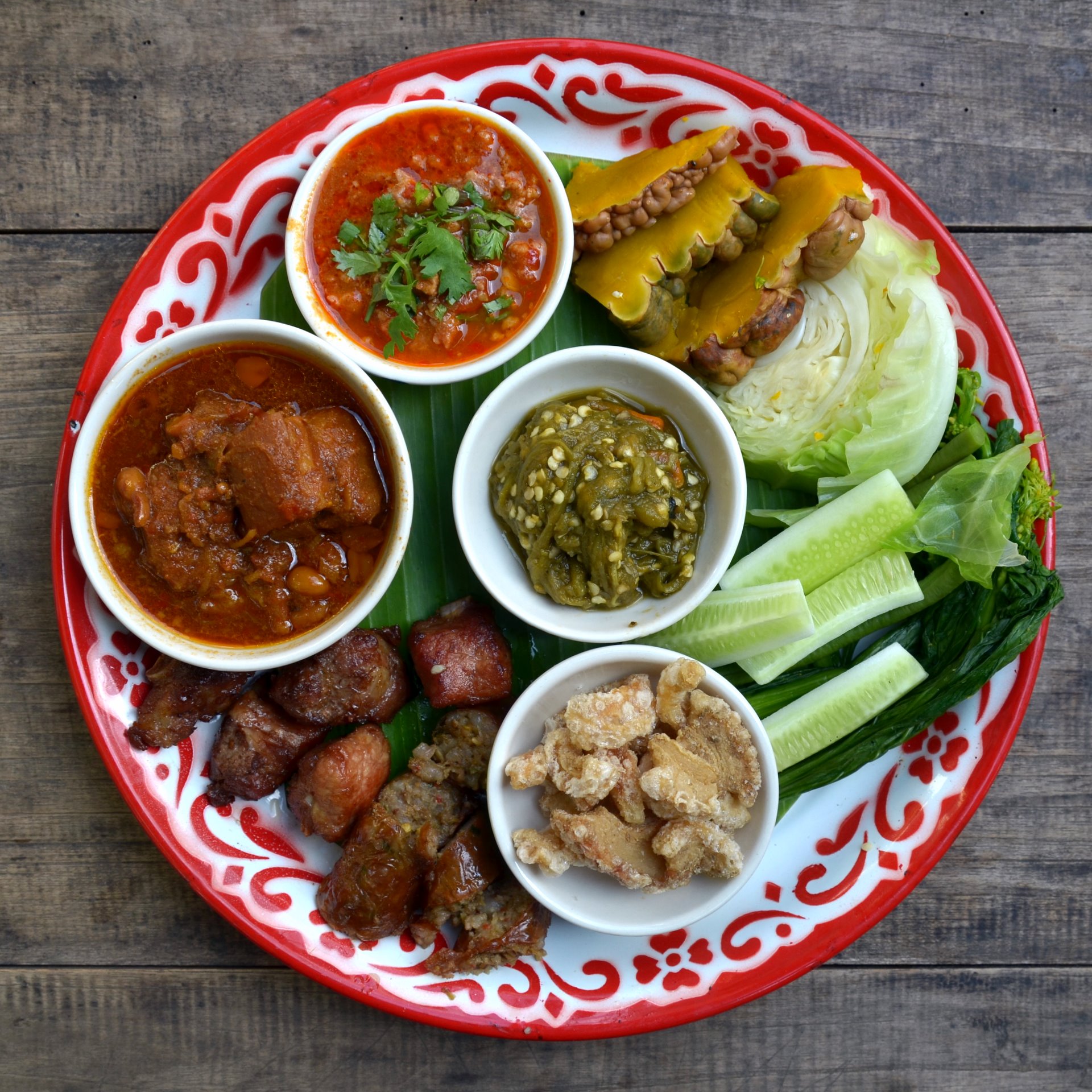
Nam phrik num and nam phrik ong
The two classic northern chilli dips. Nam phrik num is smoky roasted green chilli; nam phrik ong is a mild tomato and minced pork relish. Both come with steamed vegetables and crunchy pork crackling (khaep mu).
Kaeng hang le
A rich, slow-cooked pork curry of Burmese origin, sweet and sour with tamarind, ginger and garlic and no coconut milk. It is a festive dish often made in large pots for ceremonies.
Khao kan jin
A Shan specialty of rice mixed with pork and pork blood, steamed in a banana leaf and served with fried garlic, chilli and cucumber. It is sold at morning markets and makes an excellent snack.
Yunnanese food in Doi Mae Salong
In the hills, restaurants run by Yunnanese families serve braised pork leg with steamed buns, stir-fried mountain vegetables, cured ham and noodle soups. Pair a meal with the local oolong tea, sold in dozens of tasting shops along the main road.
Mountain coffee and pineapples
Chiang Rai grows some of Thailand’s best-known arabica on Doi Chaang and Doi Tung, and the province is famous for its small, sweet Nang Lae and Phu Lae pineapples, which have protected geographical indication status. Look for them at roadside stalls north of the city.
Markets and food streets
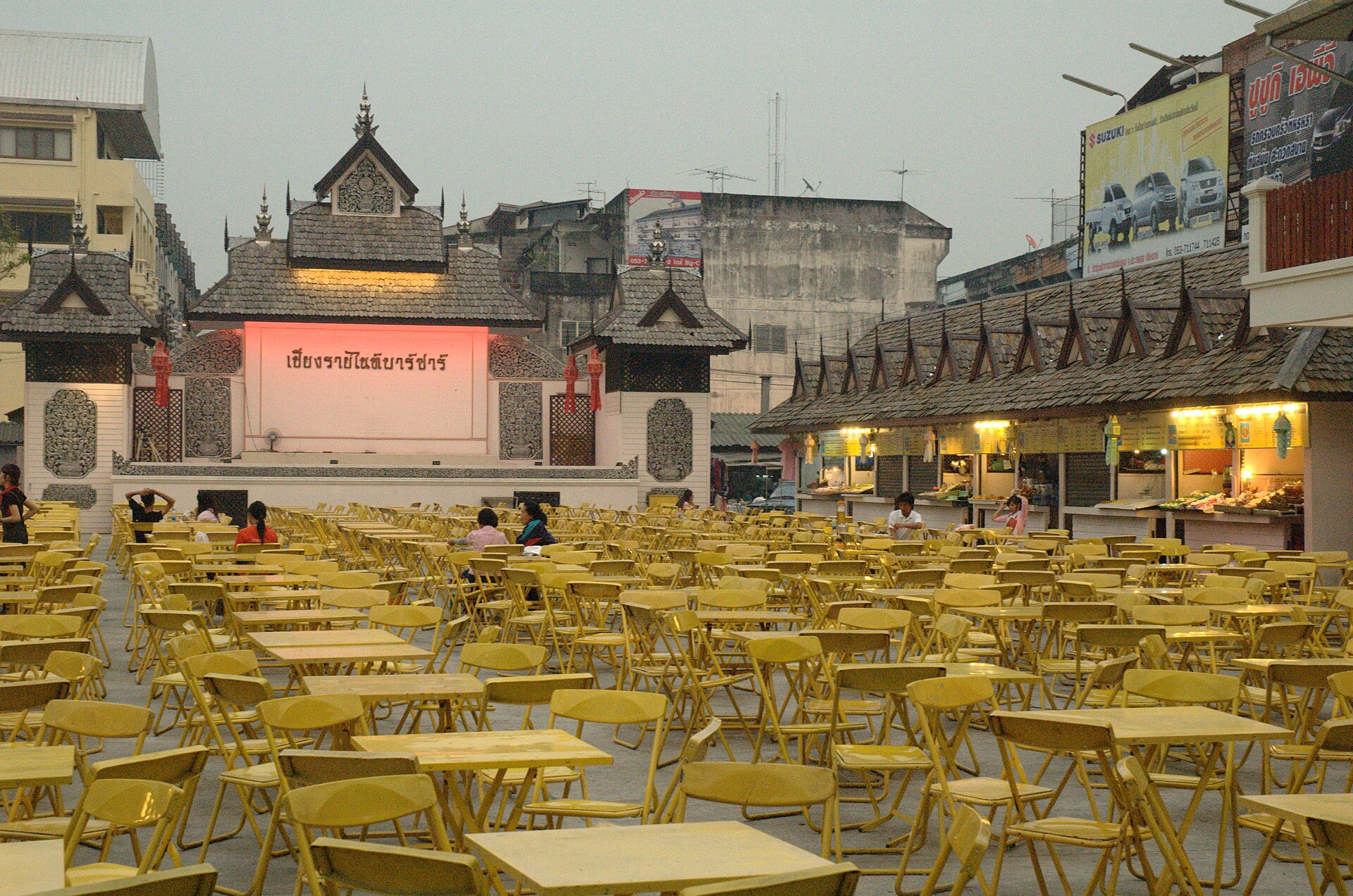
- Night Bazaar food court: Open every evening in the centre of town, with long tables, hot-pot jim jum clay pots, grills and live music. Map
- Saturday Walking Street (Thanalai Road): Stretches of street food, handicrafts and performances from late afternoon on Saturdays. Map
- Sunday Walking Street (Sankhongnoi Road): A more local Sunday evening market with cheap snacks and northern dishes. Map
- Municipal Market (Talat Tessaban): The morning market near the Clock Tower is the place for sai ua, chilli dips, sticky rice and seasonal fruit. Map
- Doi Mae Salong morning market: Hill-tribe vendors sell vegetables, tea and snacks at dawn; go early in the cool season.
Well-known places to eat
These long-running local favourites are popular with both residents and visitors. Small family shops change hours and days off often, so check the latest information on Google Maps before you go.
- Paa Suk – a much-loved spot for khanom jeen nam ngiao; go in the morning because it closes in the afternoon. Map
- Khao Soi Phor Jai – a no-frills shop known for its khao soi and grilled sausage. Map
- Chivit Thamma Da – a riverside café and restaurant on the Kok River, good for a relaxed lunch with northern and international dishes. Map
- Singha Park – restaurants and cafés overlooking the tea fields, convenient after visiting the White Temple. Map
- Doi Tung cafés – coffee and macadamia snacks grown by the Doi Tung development project, beside the Mae Fah Luang Garden. Map
Festival food and seasonal treats
During Songkran (13–15 April), families in Chiang Rai prepare khanom jok (steamed sticky-rice dumplings filled with coconut and sugar) to offer at temples, and tables fill with larb, curries and sticky rice for gatherings with elders. Read our guide to Lanna New Year customs for the background. In the cool season (December–February), the Chiang Rai Flower Festival brings rows of food stalls to the city parks, and Doi Mae Salong’s tea shops are at their busiest as the cherry blossoms bloom.
Tips for eating in Chiang Rai
- Northern food is eaten with sticky rice by hand; take a small ball, flatten it and use it to scoop.
- Many noodle shops open early and close by mid-afternoon; dinner is easier at markets and the Night Bazaar.
- Say mai phet if you want less chilli, but nam phrik num is meant to be fiery.
- Prices at local shops are low: a bowl of noodles usually costs well under 100 baht.
Frequently asked questions
What food is Chiang Rai famous for?
Khanom jeen nam ngiao, khao soi, northern larb, sai ua sausage, chilli dips, Yunnanese dishes from Doi Mae Salong, oolong tea, mountain coffee and Nang Lae and Phu Lae pineapples.
Where is the best place to try many dishes at once?
The Night Bazaar food court every evening, or the Saturday and Sunday walking streets.
Is Chiang Rai food very spicy?
Some dishes, such as nam phrik num and larb, can be hot; others, like nam phrik ong and kaeng hang le, are mild. Ask for less spice if needed.
Can vegetarians eat well in Chiang Rai?
Yes. Look for the yellow jay flags that mark vegan stalls, and ask for vegetables, tofu and mushroom versions of curries and noodles.
More Chiang Rai guides
Cover photo: ChiangRai NightBazaar FoodCourt.JPG · Jpatokal · CC BY-SA 4.0 · Wikimedia Commons