Chiang Rai is Thailand’s northernmost province, a land of misty tea hills, river valleys and some of the most original temple art in the country. King Mengrai founded the city in 1262, decades before he built Chiang Mai, and the province still feels like the quieter, greener cousin of its famous neighbour. Most visitors come for the White Temple, but the real reward is the countryside beyond it: the gardens of Doi Tung, the Chinese tea village of Doi Mae Salong, the Golden Triangle where three countries meet, and cool-season sunrises above a sea of cloud at Phu Chi Fa.
- Region: Upper Northern Thailand, bordering Myanmar and Laos
- Best time: November to February (cool and dry)
- How long: 2–3 days for the highlights
- Nearest airport: Mae Fah Luang–Chiang Rai International (CEI)
Getting there and getting around
Flights from Bangkok’s Don Mueang and Suvarnabhumi airports take about 1 hour 15 minutes, and the airport is only 15–20 minutes from town. From Chiang Mai, comfortable air-conditioned buses run several times a day and take roughly 3 to 3.5 hours; overnight buses from Bangkok take around 11–12 hours. In town, use ride-hailing apps, red songthaew trucks or a tuk-tuk. To reach Doi Tung, the Golden Triangle, Mae Salong or Phu Chi Fa you will want a rented car, a hired driver or a day tour, because public transport to the hills is slow and infrequent.
Top things to do in Chiang Rai
1. Wat Rong Khun (the White Temple)
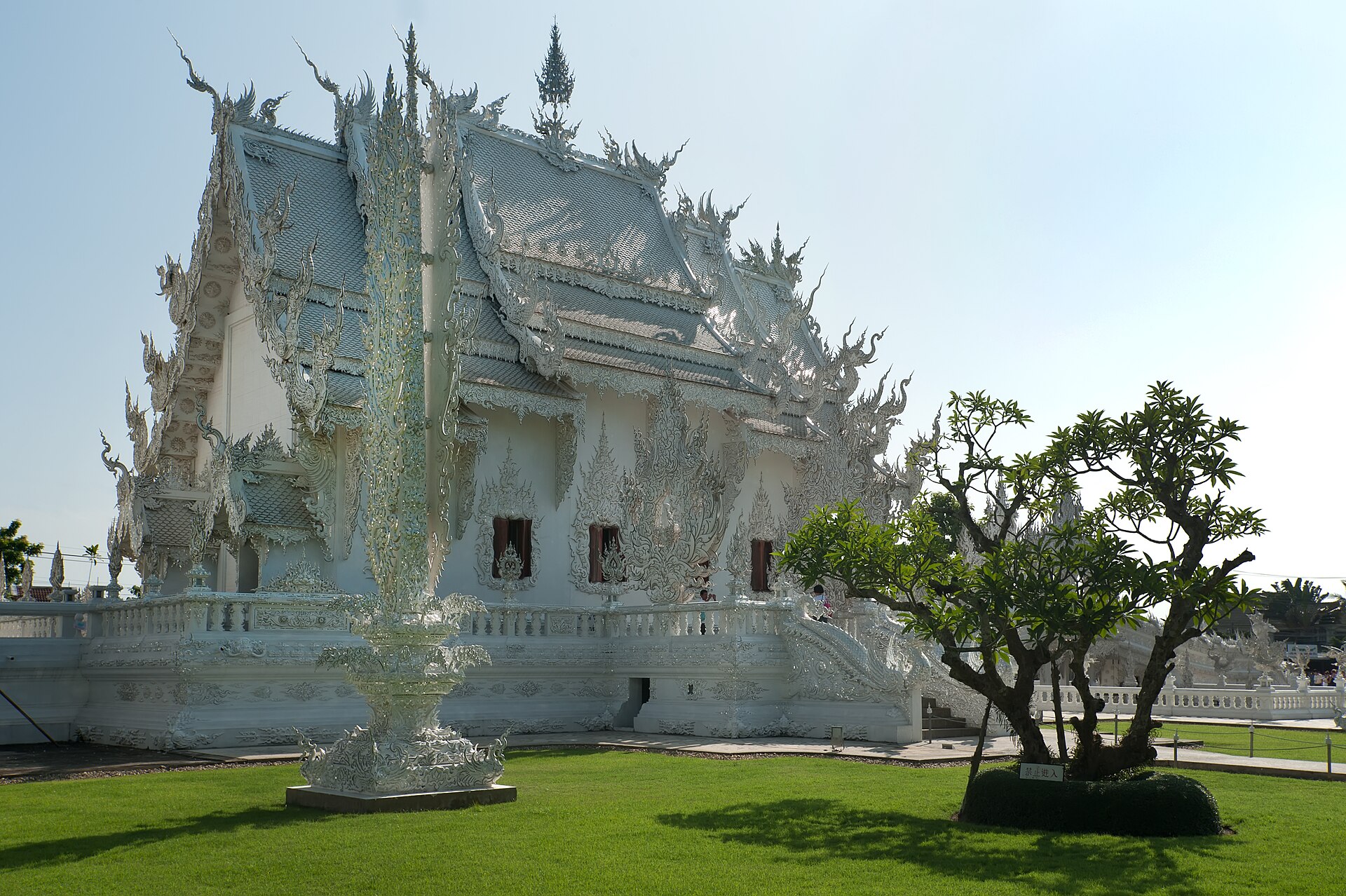
The dazzling white temple designed by national artist Chalermchai Kositpipat is Chiang Rai’s signature sight. Mirror mosaics glitter in the sun, a bridge crosses a sea of reaching hands, and the murals inside mix Buddhist imagery with pop-culture figures. Since 1 January 2026 foreign visitors pay 200 baht; Thai citizens enter free. Arrive at opening time to beat tour buses and dress modestly. Find it on Google Maps.
2. Wat Rong Suea Ten (the Blue Temple)
Completed in 2016, this temple on the northern edge of town is painted in deep sapphire blue and gold, with a serene white Buddha inside the main hall. It is smaller and calmer than the White Temple and free to enter, making it a good late-afternoon stop. Map.
3. Baan Dam Museum (the Black House)
The late artist Thawan Duchanee created this dark counterpoint to the White Temple: a compound of dozens of black timber buildings filled with buffalo horns, animal skins, carved furniture and brooding art. It is thought-provoking rather than pretty, and well worth an hour. Map.
4. The Clock Tower and Night Bazaar
The golden Clock Tower in the city centre, also designed by Chalermchai, comes alive with a short light-and-music show every evening at 7, 8 and 9 pm. Walk on to the Night Bazaar for handicrafts and a big open-air food court, or time your visit for the Saturday Walking Street on Thanalai Road or the Sunday market on Sankhongnoi Road. Map.
5. Wat Phra Kaew Chiang Rai
According to tradition, the Emerald Buddha now in Bangkok was discovered here in 1434 when lightning split an old chedi. Today the temple houses a jade image carved in 1991, and its peaceful grounds and teak halls are a pleasant escape from the heat. Map.
6. Wat Huay Pla Kang
A towering white statue of Guan Yin, the goddess of mercy, looks over the valley west of town. Visitors can ride a lift up inside the statue for views across the rice fields, then explore the nine-tiered pagoda beside it. Map.
7. Singha Park
This huge farm park south of the city has tea terraces, lakes, flower beds and cycling routes, with tram tours for those who prefer to sit. It is an easy add-on after the White Temple and a popular place for lunch with a view. Map.
8. Doi Tung
On the slopes of Doi Tung, the late Princess Mother built a Swiss-chalet-style residence and planted the Mae Fah Luang Garden, which is colourful all year. The royal development project here replaced opium with coffee, macadamia and handicrafts, and its cafés and shops support local hill communities. Continue up to Wat Phra That Doi Tung for mountain views. Map.
9. The Golden Triangle and Chiang Saen
At Sop Ruak the Ruak River meets the Mekong and you can see Laos and Myanmar from one viewpoint. The Hall of Opium museum explains the region’s complicated history in depth. Nearby Chiang Saen is an ancient walled town with brick chedis such as Wat Pa Sak and Wat Chedi Luang shaded by old trees. Map.
10. Doi Mae Salong
Settled by Chinese soldiers and their families after 1949, this mountain village (also called Santikhiri) is famous for oolong tea, Yunnanese food and hillsides of wild Himalayan cherry that bloom pink around December and January. Stay a night to see the morning mist roll through the tea rows. Map.
11. Phu Chi Fa
This cliff-edge viewpoint on the Laos border is the province’s most famous sunrise spot. On cool-season mornings from about November to February, a sea of mist fills the valleys below. It is roughly a 2.5-hour drive from town, so most people stay overnight in Thoeng district and start the short hike before dawn. Map.
12. Tham Luang–Khun Nam Nang Non National Park
The forest park near Mae Sai became known worldwide after the 2018 rescue of a youth football team from Tham Luang cave. Visitors come to see the memorial and the landscape; access inside the cave is limited and seasonal, so check the park’s current rules before you go. Map.
A two-day Chiang Rai route
Day 1 – City and temples: White Temple at opening time, lunch at Singha Park, then the Blue Temple and Wat Phra Kaew in the afternoon. Watch the Clock Tower show and eat at the Night Bazaar (or the walking street on a Saturday or Sunday).
Day 2 – Mountains and the Mekong: Start at Baan Dam, drive up to Doi Tung for the Mae Fah Luang Garden, then continue to the Golden Triangle and the Hall of Opium. Finish in Chiang Saen for sunset over the Mekong. With a third day, add Doi Mae Salong or a Phu Chi Fa sunrise.
Festivals and events in Chiang Rai
- Songkran / Pi Mai Mueang (13–15 April): Northern New Year is celebrated with sand chedis at temples, the bathing of Buddha images and the respectful rod nam dam hua blessing of elders, alongside water play in town. Our guide to Songkran in Chiang Mai explains the Lanna customs, and the Songkran etiquette guide covers the do’s and don’ts.
- Chiang Rai Flower Festival (usually December–January): The city’s parks fill with flower displays, night lights and food stalls during the cool season.
- King Mengrai Festival (around late January–early February): A fair at the King Mengrai Monument honours the city’s founder with ceremonies, local products and performances.
- Loy Krathong and Yi Peng (November full moon): Candle-lit floats drift on the Kok River and lanterns are released at permitted sites.
- Cherry blossom and sea-of-mist season (December–February): Not a festival, but the busiest and most photogenic time in the mountains.
Festival dates change each year with the lunar calendar and local announcements, so confirm with the Tourism Authority of Thailand before you travel.
Practical tips
- Bring a warm layer from November to February; mountain mornings can drop close to 10 °C.
- From roughly February to April, crop burning can cause haze. Check the air quality index before planning hill viewpoints.
- Cover shoulders and knees at temples and take off your shoes before entering halls.
- Border crossings at Mae Sai and Chiang Khong are not always open to tourists; check the current situation and carry your passport in border areas.
- Mountain roads are steep and winding. If you are not used to them, hire a local driver rather than riding a scooter.
Frequently asked questions
How many days do I need in Chiang Rai?
Two full days cover the city temples, Doi Tung and the Golden Triangle. Allow three days if you also want Doi Mae Salong or a Phu Chi Fa sunrise.
How much is the White Temple entrance fee?
Foreign visitors pay 200 baht from 1 January 2026, while Thai citizens enter free. Fees can change, so check on arrival.
Can I visit Chiang Rai as a day trip from Chiang Mai?
Yes, many tours do it, but it means about seven hours on the road. Staying at least one night lets you enjoy the evening Clock Tower show and the mountains at their best.
When is the best time to visit?
November to February brings cool, clear weather and flowers. The rainy season from June to October is green and quiet, but mountain roads can be slippery.
More Chiang Rai and northern Thailand guides
- Chiang Rai food guide: dishes to try and where to eat
- Chiang Mai travel guide
- Songkran in Chiang Mai: Lanna New Year by the Old City Moat
Cover photo: White Temple XXI.jpg · Hans-Jürgen Neubert · CC BY 4.0 · Wikimedia Commons