Bangkok can feel overwhelming on the first afternoon: heat, traffic and a skyline that never seems to end. Give it a couple of days and the city starts to make sense. The river ties the old royal quarter together, the Skytrain glides over the traffic and good food is never far away. Here are the sights worth your time, what to eat, where to stay and how to get around.
Why visit Bangkok
Few capitals pack so much contrast into one place. On the east bank of the Chao Phraya River, the historic Rattanakosin district holds the Grand Palace and some of Thailand’s most important temples, while Siam and Sukhumvit, a short train ride away, are all malls, cafés and rooftop bars. Most first-time visitors spend three or four days here; if you only have one, follow our one-day route along the Chao Phraya River.
Top things to do in Bangkok
The Grand Palace and Wat Phra Kaew
The former royal residence and the Temple of the Emerald Buddha share one walled compound and are the city’s headline sight: glittering spires, guardian giants, galleries painted with scenes from the Ramakien (the Thai version of the Ramayana) and the small, deeply revered Emerald Buddha image. The official website lists daily opening from 8:30 am, with tickets sold until 3:30 pm. Foreign visitors currently pay 500 baht; Thai nationals enter free with an ID card.
Tip: the dress code is strict, so cover your shoulders and legs, and arrive at opening time to beat the crowds and the heat.
Wat Pho
A short walk south, Wat Pho houses a gilded reclining Buddha about 46 metres long, the soles of its feet inlaid with mother-of-pearl, along with quiet courtyards and chedis covered in ceramic mosaics. It is also a long-standing school of traditional Thai massage, and you can book a treatment on site. Foreign visitors currently pay 300 baht. Wat Pho closes later than the palace, so it makes a good afternoon stop.
Wat Arun
Across the river, Wat Arun (the Temple of Dawn) is known for its tall Khmer-style prang, decorated with thousands of pieces of coloured porcelain. Small ferries from Tha Tien pier, near Wat Pho, cross in a few minutes, and foreign visitors currently pay 200 baht.
Tip: for the classic photo, look back at Wat Arun from the Tha Tien side at sunset.
A ride on the Chao Phraya
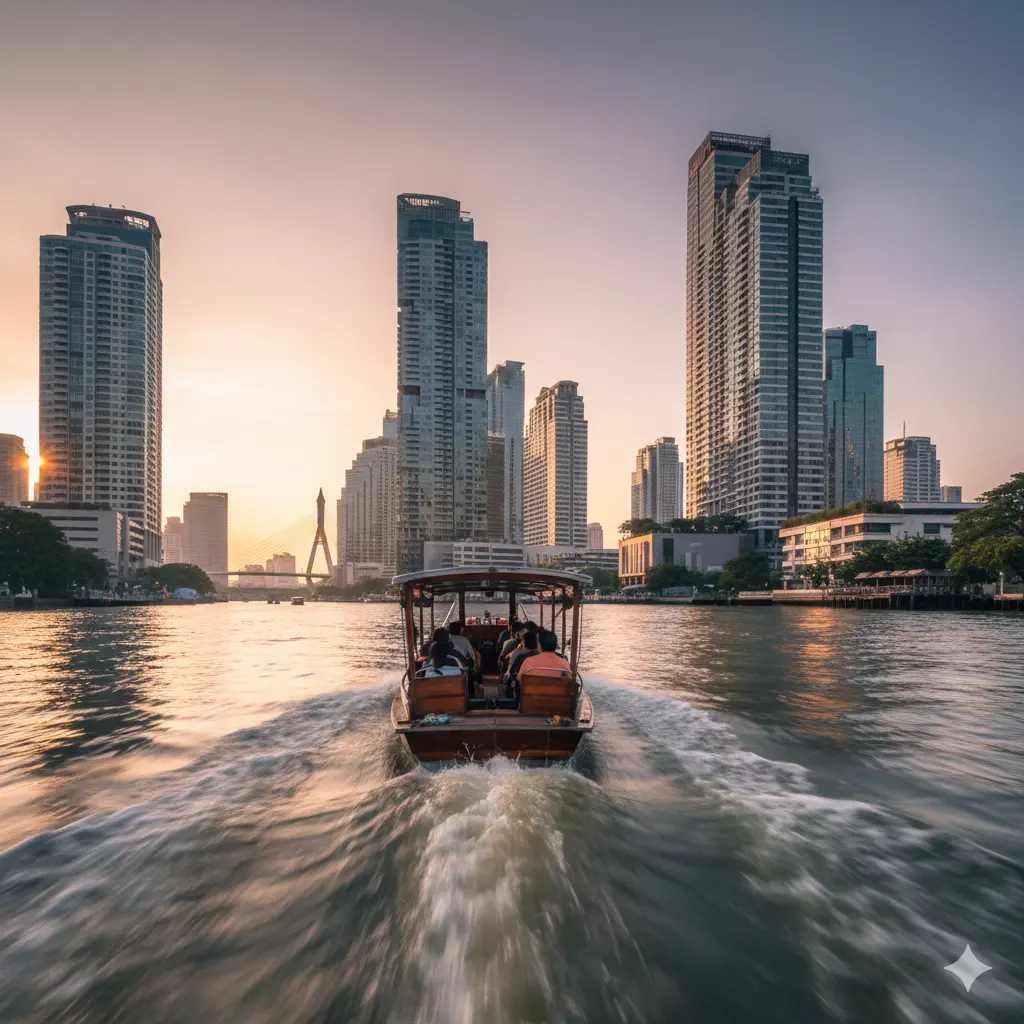
Chao Phraya Express boats work like a floating bus service, stopping at numbered piers on both banks. Useful stops include Sathorn (linked to BTS Saphan Taksin), Tha Chang for the Grand Palace and Tha Tien for Wat Pho and the Wat Arun ferry. Fares and routes change from time to time, so check the boards at the pier, and ignore touts who claim the public boat is not running.
Chinatown (Yaowarat) and Talat Noi
Yaowarat Road comes alive after dark, when food stalls spill onto the pavement beneath a canopy of Chinese signs; come hungry and graze. By day the lanes are busy with wholesalers, gold shops and incense-filled shrines. Next door, Talat Noi is an older riverside quarter of shophouses, engine workshops and street art. MRT Wat Mangkon station puts you right in the middle.
The Golden Mount and the old town
The Golden Mount at Wat Saket is a man-made hill crowned with a golden chedi. A spiral staircase leads to a terrace with wide views over the old city, and there is a modest entry fee. From here you can walk on to the Giant Swing, Wat Suthat and the leafy lanes of Banglamphu.
Chatuchak Weekend Market
Chatuchak is a vast maze of thousands of stalls selling vintage clothing, ceramics, plants, homeware and snacks. The full market opens on Saturdays and Sundays during the day; on Wednesdays and Thursdays only the plant section trades. It sits next to MRT Chatuchak Park and Kamphaeng Phet stations and BTS Mo Chit.
Tip: go in the morning, carry small notes and use the central clock tower as a meeting point. Or Tor Kor Market, across the road, is excellent for tropical fruit.
Lumphini Park
Bangkok’s best-known park is a welcome break from concrete, with joggers and tai chi groups in the early morning and monitor lizards lounging on the lawns. If you are there at 6 pm, everyone stands still while the national anthem plays; do the same.
What to eat in Bangkok
- Pad kra pao – minced meat stir-fried with holy basil and chilli over rice, usually topped with a fried egg.
- Tom yum goong – hot and sour prawn soup with lemongrass, galangal and lime leaves.
- Boat noodles (kuay teow reua) – small bowls in a dark, spiced broth; the area around Victory Monument is known for them.
- Khao man gai – poached chicken on rice cooked in chicken stock, with a ginger and soybean sauce.
- Som tam – green papaya salad from the northeast, eaten with grilled chicken and sticky rice.
- Mango sticky rice – at its best from about March to May, when Thai mangoes are in season.
For street food, head to Yaowarat or Banglamphu in the evening; for air-conditioning and clear prices, try the food courts in major shopping centres. Ask for phet nit noi (“a little spicy”) if you are unsure about chilli.
Where to stay in Bangkok
Location matters in a city this size, so stay within walking distance of a BTS or MRT station.
- Rattanakosin and Banglamphu – walk to the Grand Palace; guesthouses and boutique hotels around Khao San and Phra Athit roads, though train links are limited (MRT Sanam Chai helps).
- Riverside – river views, hotel shuttle boats and easy access to the express boats.
- Siam – the most central option, where the two BTS lines meet.
- Sukhumvit – restaurants, nightlife and hotels at every price; our guide to food and lifestyle around Siam and Sukhumvit has more ideas.
- Silom and Sathorn – the business district beside Lumphini Park, with good transport.
Getting there and getting around
Most international flights land at Suvarnabhumi Airport (BKK), while many budget airlines use Don Mueang (DMK). From Suvarnabhumi, the Airport Rail Link reaches Phaya Thai, where it meets the BTS, in about half an hour. Don Mueang has a station on the SRT Red Line to Krung Thep Aphiwat Central Terminal, the departure point for most long-distance trains.
- BTS Skytrain and MRT subway – the quickest way across town; buy single tickets at station machines or a stored-value card.
- Boats – express boats on the river and canal boats on Khlong Saen Saep.
- Taxis and apps – ask taxi drivers to use the meter, or book a fixed fare through Grab or Bolt.
- Tuk-tuks – fun for short hops; agree the price first.
Best time to visit
The cool, dry months from about November to February are the most comfortable and the busiest. From March to May the heat builds, peaking in April, when Thailand celebrates Songkran, the Thai New Year, on 13–15 April; our guide to Songkran in Bangkok explains what to expect. The rainy season runs roughly from June to October, with heavy but often short downpours, cheaper hotels and fewer crowds.
Good to know
- Foreign visitors must complete the free online Thailand Digital Arrival Card (TDAC) within three days before arrival, using only the official immigration website.
- At temples, cover shoulders and knees, remove your shoes before entering halls and never point your feet at Buddha images.
- Ignore friendly strangers near the Grand Palace who say it is “closed today” and suggest a tuk-tuk tour; it is a long-running scam.
- Royal ceremonies can close the Grand Palace or nearby roads at short notice. The royal cremation of Queen Sirikit, the Queen Mother, is scheduled for 16 December 2026 at Sanam Luang, with ceremonies from about 15 to 19 December, so check official announcements around those dates.
- Carry small notes for markets, boats and street food, and plan indoor breaks in the midday heat.
- Easy escapes include the old capital of Ayutthaya and the beaches of Chonburi.
In short
Spend your mornings on the river and in the old town, your afternoons somewhere cool and your evenings eating your way through Chinatown or a night market. Stay near a train line, dress for temples and pace yourself in the heat, and Bangkok soon turns from overwhelming to addictive.