Lopburi is one of Thailand’s oldest cities, layered with Dvaravati, Khmer and Ayutthaya history. In the 17th century King Narai made it his second capital and received envoys from France and Persia here, and the ruins of his palace and courtiers’ homes still stand in the compact old town. Lopburi is also known worldwide for the macaques around Phra Prang Sam Yot, although numbers in the town centre have dropped since authorities began moving monkeys to enclosures in 2024. Beyond the city you will find sunflower fields in the cool season, a bat cave and Mon and Thai Boeng communities with distinctive food. Lopburi is about 150 km north of Bangkok, roughly 2.5–3 hours by car or train, so it works as a long day trip or a relaxed overnight.
- Region: Central Thailand
- Best time: November to February (cool season, sunflowers in bloom)
- How long: 1–2 days
- Getting there: Train or car from Bangkok; the station is a short walk from the old town
Getting there and getting around
Trains on the northern line run several times a day from Bangkok to Lopburi, and the station sits right in the old town, a few minutes’ walk from Phra Prang Sam Yot and King Narai’s Palace. Vans and buses also connect Bangkok and Lopburi, and driving takes around 2.5–3 hours. The old town is easy to explore on foot; for the sunflower fields, Pa Sak Jolasid Dam and the bat cave you will need a car, a hired driver or a local tour.
Top things to do in Lopburi
1. Phra Prang Sam Yot
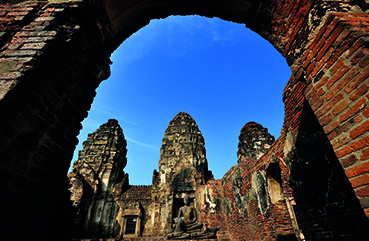
Lopburi’s symbol: three linked laterite towers built in the Khmer Bayon style, later converted into a Buddhist shrine. Fewer monkeys roam here than before, but some remain, so keep bags closed, hide food and drinks, and avoid wearing loose sunglasses or jewellery. Map
2. San Phra Kan
Across the railway from Phra Prang Sam Yot, this shrine is built around a Khmer laterite base and houses a revered image of Phra Kan (Vishnu). Locals come to pray and make offerings. Map
3. Phra Narai Ratchaniwet (King Narai’s Palace)
King Narai’s walled palace complex blends Thai, Khmer and European design, with tall gateways, reservoirs and audience halls. Several buildings now form the Somdet Phra Narai National Museum, a good introduction to Lopburi’s history. Map
4. Wat Phra Si Rattana Mahathat
Opposite the train station, this temple ruin has a tall Khmer-style prang and later Ayutthaya additions, including arched windows influenced by European architecture. Map
5. Ban Wichayen
The remains of a residence used by foreign envoys in King Narai’s time, associated with the Greek adventurer Constantine Phaulkon. Brick walls, arches and courtyards hint at the cosmopolitan court of the 1600s. Map
6. Sunflower fields
From around November to January, fields in districts such as Phatthana Nikhom bloom bright yellow. Many farms charge a small fee for photos; blooms vary each year, so check local updates. Map
7. Pa Sak Jolasid Dam
A long dam and reservoir on the Pa Sak River, popular for sunset views and cycling along the crest. In the cool season the railway sometimes runs special excursion trains that stop on the dam. Map
8. Wat Khao Wong Kot bat cave
At dusk, huge numbers of bats stream out of caves on a limestone hill, a spectacle worth timing your visit for. Bring insect repellent and a torch. Map
9. Talat Samon (Lawo Mon market)
A Mon-style community market with food, crafts and performances, held on the first weekend of the month in the afternoon and evening. Check the schedule before you go. Map
10. Thai Boeng and salted-egg villages
Lopburi’s rural communities preserve distinctive food traditions, from Thai Boeng soups to salted eggs coated in local white clay. Community museums and learning centres welcome visitors. Map
A two-day Lopburi route
Day 1: Arrive by morning train and walk to Wat Phra Si Rattana Mahathat, King Narai’s Palace and the museum, Ban Wichayen, then Phra Prang Sam Yot and San Phra Kan in the late afternoon. Eat dinner at an old-town night market.
Day 2: Drive out to the sunflower fields (in season) and Pa Sak Jolasid Dam, have lunch at a local restaurant, and finish at Wat Khao Wong Kot to watch the bats emerge at sunset.
Festivals and events in Lopburi
- King Narai Reign Fair (February): The old town turns back the clock, with visitors dressed in period costume, light-and-sound shows at the palace and a market styled on the Ayutthaya era; the 2026 fair ran in mid-February.
- Monkey Buffet Festival (late November): Traditionally held around Phra Prang Sam Yot on the last weekend of November, with fruit and vegetables laid out for the monkeys. The format may change as monkey numbers fall, so check before you go.
- Songkran (13–15 April): Merit-making and water play in the city. See our Songkran etiquette and survival guide.
Festival dates change each year, so check with the Tourism Authority of Thailand.
Practical tips
- Even with fewer monkeys, never feed or touch them, and keep plastic bags and drinks out of sight.
- Most old-town sights are within walking distance of the station, so you can leave luggage at your hotel and explore on foot.
- Midday is hot; visit ruins in the morning and late afternoon and use the museum for a cool break.
- Cover shoulders and knees at temples and shrines.
- For sunflowers, go on a weekday morning to avoid crowds.
Frequently asked questions
Are there still monkeys in Lopburi?
Yes, but far fewer in the town centre since a capture and sterilisation programme began in 2024. Some still live around Phra Prang Sam Yot and San Phra Kan, so take normal precautions.
Can I visit Lopburi as a day trip from Bangkok?
Yes. Take an early train, explore the old town on foot and return in the evening. Stay overnight if you want to see the sunflowers or the bat cave.
Can I combine Lopburi with Ayutthaya?
Yes. Ayutthaya lies on the same railway line, about an hour south. See our Ayutthaya travel guide.
When are the sunflowers in bloom?
Usually from around November to January, depending on the year’s planting and weather.
More Lopburi and central Thailand guides
- Lopburi food guide: Mon and Thai Boeng dishes, markets and more
- Ayutthaya travel guide
- Things to do in Korat
Cover photo: Lopburi Prang Sam Yot 4.jpg · Mr.Peerapong Prasutr · CC BY-SA 4.0 · Wikimedia Commons