Surat Thani’s kitchen is shaped by the Gulf of Thailand, the Tapi River and generations of Hokkien Chinese traders. The province is famous across Thailand for its huge, creamy oysters, the salted duck eggs of Chaiya and the Rong Rian rambutan, while the town’s breakfast shops serve Chinese-Thai noodles and doughnuts that have earned a place in the MICHELIN Guide. On the islands, coconut groves and fishing villages mean seafood curries and coconut everything. Here is what to eat and where.
Dishes and local products to try
Surat Thani oysters
Oysters farmed in the brackish estuaries of Kanchanadit and nearby districts grow unusually large. Locals eat them raw on crushed ice with fried shallots, chilli sauce, lime and fresh cha-om leaves, or as a crisp oyster omelette. Riverside and estuary restaurants serve them by the plate.
Chaiya salted eggs
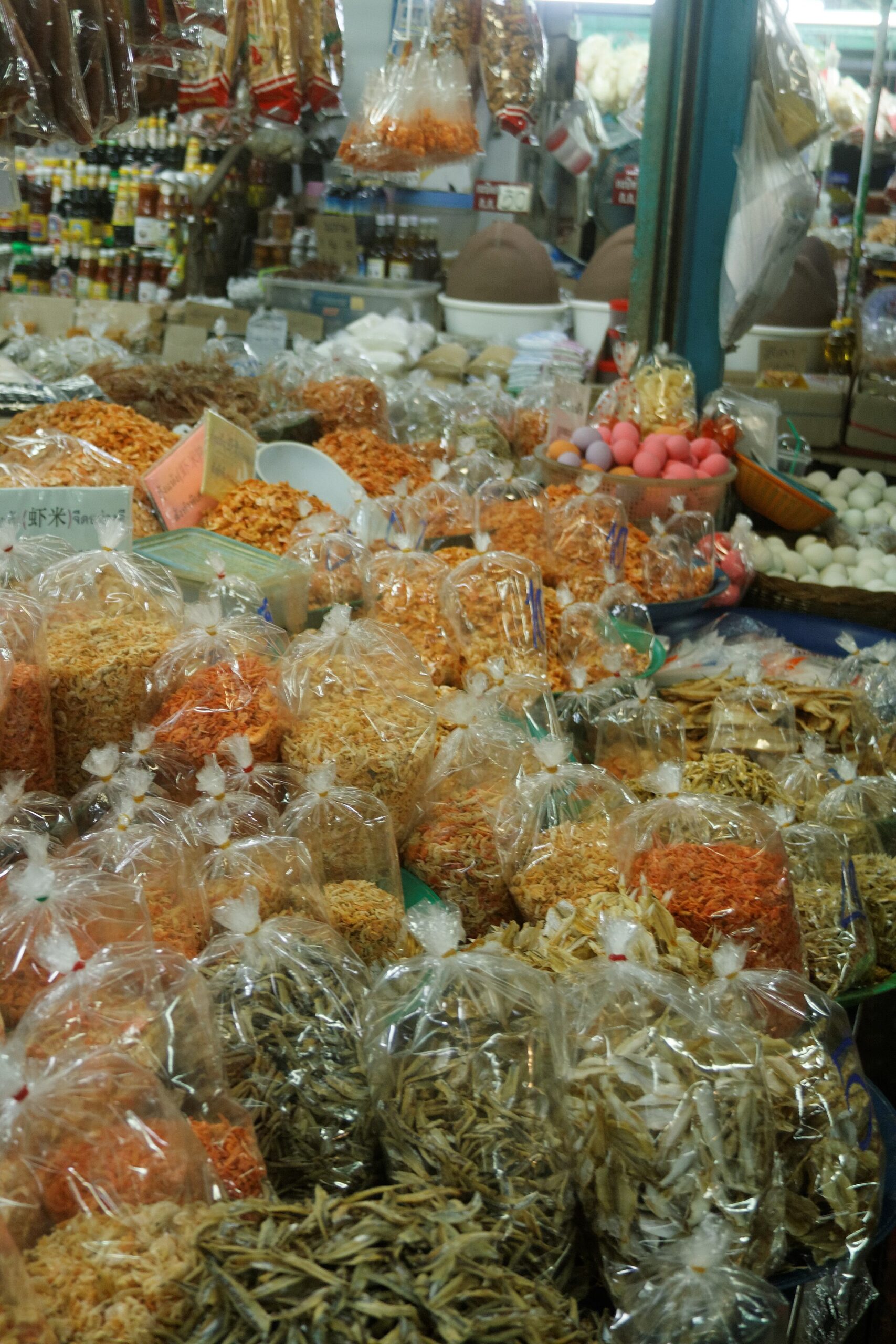
Duck eggs from Chaiya are traditionally coated in a mixture of salt and fine earth before curing, which gives them rich, orange, oily yolks. They are sold at shops along the main road through Chaiya and make an easy souvenir; salted-egg crackers and stir-fries are popular too.
Rong Rian rambutan
Surat Thani’s sweet, crisp rambutan variety was first grown from a tree at a school in Ban Na San district, hence the name “school rambutan”. The season peaks around July and August.
Long tong and Chinese-style noodles
A town favourite at breakfast: wide flat rice noodles served dry in a pink sweet-and-sour sauce with fish balls and vegetables, alongside other Hokkien-style noodle soups and fish-ball dishes.
Phra Ram Long Song
Tender pork and blanched water spinach smothered in a rich peanut curry sauce, served over rice. The name means “Rama bathing” and the dish is a Chinese-Thai classic in Surat Thani.
Patongko with custard
Crisp Chinese-style fried dough sticks dipped in sweet pandan custard and served with hot coffee or tea — the classic southern breakfast.
Southern curries with khanom jeen
Fiery kaeng tai pla (fermented fish-innard curry), sour yellow kaeng som with fish and green papaya, and dry, intensely spiced kua kling are eaten with rice or fresh rice noodles and a big plate of raw vegetables to cool the heat.
Island seafood and coconut
On Ko Samui, coconut is in everything from curries to desserts, and fishing villages serve squid, crab and whole fish grilled or fried with southern curry paste. Try fresh coconut water straight from the shell at roadside stalls.
Markets and food streets
- Surat Thani night market: The town’s main evening market has grilled seafood, southern curries, roti and desserts at local prices. Map
- Fisherman’s Village Walking Street, Bophut (Friday evenings): Samui’s best-known weekly food street. Map
- Lamai night market: Street food stalls and cheap seafood on Samui’s south-east coast. Map
- Maenam Walking Street (Thursday evenings): A relaxed, more local market on Samui’s north coast. Map
- Thong Sala night market, Ko Phangan: The island’s food hub near the main pier, open every evening. Map
Well-known places to eat
The restaurants below have been recognised with the MICHELIN Guide’s Bib Gourmand for good food at moderate prices. Surat Thani had eight Bib Gourmand venues and Ko Samui two in the list announced in November 2026; the selection changes every year, and small shops change hours often, so check before you go.
- Roroy (Surat Thani) – newly added to the Bib Gourmand list announced in November 2026; casual seafood with much of the catch from Ko Samui, such as stir-fried ray with pineapple and grilled mackerel in banana leaf. Map
- Yok Kheng (Surat Thani town) – known for long tong noodles in pink sauce; featured as a Bib Gourmand in the 2024 guide. Map
- Khao Phra Ram Long Song Lao Ohw (Surat Thani town) – pork in peanut curry over rice; a 2024 Bib Gourmand. Map
- Lian Tai (Surat Thani town) – patongko with pandan custard and coffee; a 2024 Bib Gourmand. Map
- Keo Pla (Surat Thani town) – fish dumplings and fish-ball noodle soup; a 2024 Bib Gourmand. Map
- Krua Chao Baan (Ko Samui) – seafood with a view on the east coast, known for seafood omelette and squid with pineapple; listed as a Bib Gourmand in 2024. Map
Festival food and seasonal treats
During the Chak Phra festival at the end of Buddhist Lent (usually October), families wrap khanom tom — triangles of sticky rice in coconut or palm leaves — to offer to the Buddha images as they pass on floats and boats. The Rambutan Fair, usually in August, is the best time to taste Rong Rian rambutan and other southern fruit. For Songkran on the islands (13–15 April), our Songkran etiquette guide explains how to join in respectfully.
Tips for eating in Surat Thani
- Breakfast is the town’s big meal: noodle and patongko shops open early and many close by lunchtime.
- Southern food is spicier than in Bangkok; ask for mai phet mak (not too spicy) if needed.
- Eat oysters only at busy places with a high turnover, especially in hot weather.
- On Samui, local restaurants away from Chaweng are far cheaper than beachfront tourist spots.
Frequently asked questions
What is Surat Thani famous for food-wise?
Large oysters, Chaiya salted eggs, Rong Rian rambutan, Chinese-Thai breakfast noodles and patongko, southern curries and Samui coconuts and seafood.
Where can I try Surat Thani oysters?
Seafood restaurants in Surat Thani town and along the estuaries of Kanchanadit district serve them fresh every day.
Are there MICHELIN-listed restaurants on Ko Samui?
Yes. Ko Samui has had Bib Gourmand restaurants in every recent edition; the current list is on the MICHELIN Guide website.
When is rambutan season?
Usually from about June to August, with the Rambutan Fair in Surat Thani town around August.
More Surat Thani guides
Cover photo: Surat Thani Market Hall Ahoerstemeier 1.jpg · User:Ahoerstemeier · CC BY 4.0 · Wikimedia Commons