Chanthaburi, whose name means “city of the moon”, is one of eastern Thailand’s most rewarding and least hurried provinces. Its capital is a trading town built on gems and fruit, with a riverside quarter of old wooden shophouses, a French-built cathedral and a weekend market where dealers haggle over sapphires on folding tables. Beyond town, the province stretches from waterfall-filled hills to a quiet coastline of mangroves, fishing villages and scenic viewpoints.
Why visit Chanthaburi
Chanthaburi is a place for travellers who enjoy variety at a gentle pace. In a single weekend you can explore a historic waterfront where Thai, Chinese and Vietnamese communities have lived together for generations, swim beneath a waterfall in a national park, drive one of Thailand’s prettiest coastal roads and gorge on fruit straight from the orchard. It sees far fewer foreign visitors than the beach resorts further west, which is a large part of its charm. For a shorter introduction, see our overview of Chanthaburi’s gems and seaside.
Top things to do in Chanthaburi
Chanthaboon Waterfront Community
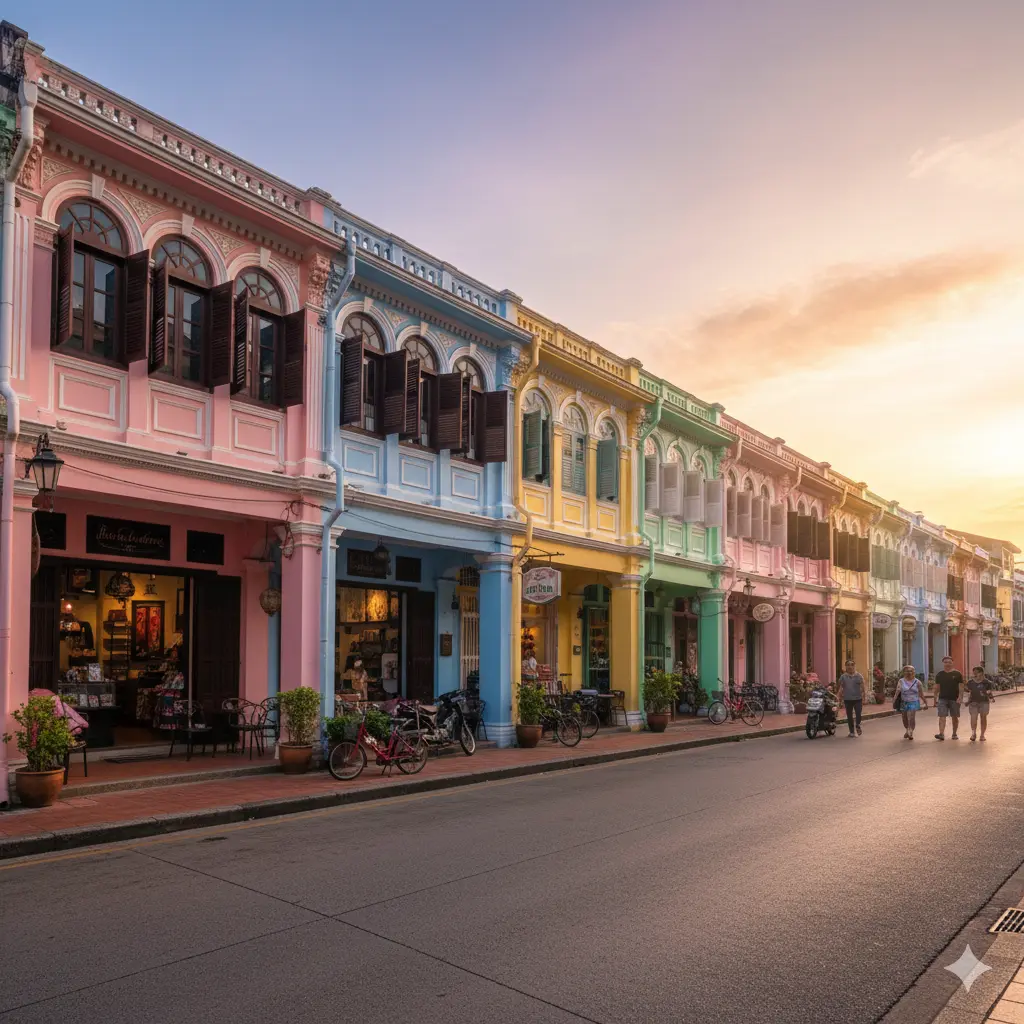
A narrow lane of about one kilometre runs along the Chanthaburi River, lined with old wooden and Sino-Portuguese-style houses, some with intricate carved fretwork. The community’s roots go back more than three centuries, and its ancestors came from Thai, Chinese and Vietnamese families. Today many houses are home to small museums, cafes and shops selling local snacks, while others are still lived in. Visit in the late afternoon, when the light softens and the street comes alive.
Cathedral of the Immaculate Conception
Directly across the river from the waterfront, linked by a footbridge, stands one of the largest Catholic churches in Thailand. Built in a neo-Gothic style between 1904 and 1909 under a French missionary, it has twin spires and a long nave lit by stained-glass windows, some honouring Vietnamese Catholic martyrs. Visitors are welcome outside service times; dress modestly and keep quiet if Mass is in progress.
The gem market
Chanthaburi has long been a centre for cutting and trading coloured stones. On Si Chan Road and the lanes around it, the gem market comes to life from Friday to Sunday, from mid-morning to early afternoon, with Saturday the busiest day. Dealers examine stones under lamps and tweezers in a scene that is fascinating to watch. Treat it as an experience rather than a shopping opportunity: without expert knowledge, buying loose stones is risky, so if you want a souvenir, choose finished jewellery from an established shop.
Namtok Phlio National Park
About 14 km from town, Phlio waterfall cascades into a deep pool filled with large, protected carp; please do not touch or feed them. Swimming is allowed in the pools below the main fall. Near the waterfall stand two royal memorials: Alongkorn Chedi, built in 1876 by King Chulalongkorn (Rama V) to mark his visits, and a pyramid-shaped monument he erected in 1881 in memory of Queen Sunandha Kumariratana, who had drowned in a boating accident the year before. The park is open daily from 08:30 to 16:30; at the time of writing, the fee is 200 baht for foreign adults and 40 baht for Thai adults.
The coastal road and Noen Nang Phaya viewpoint
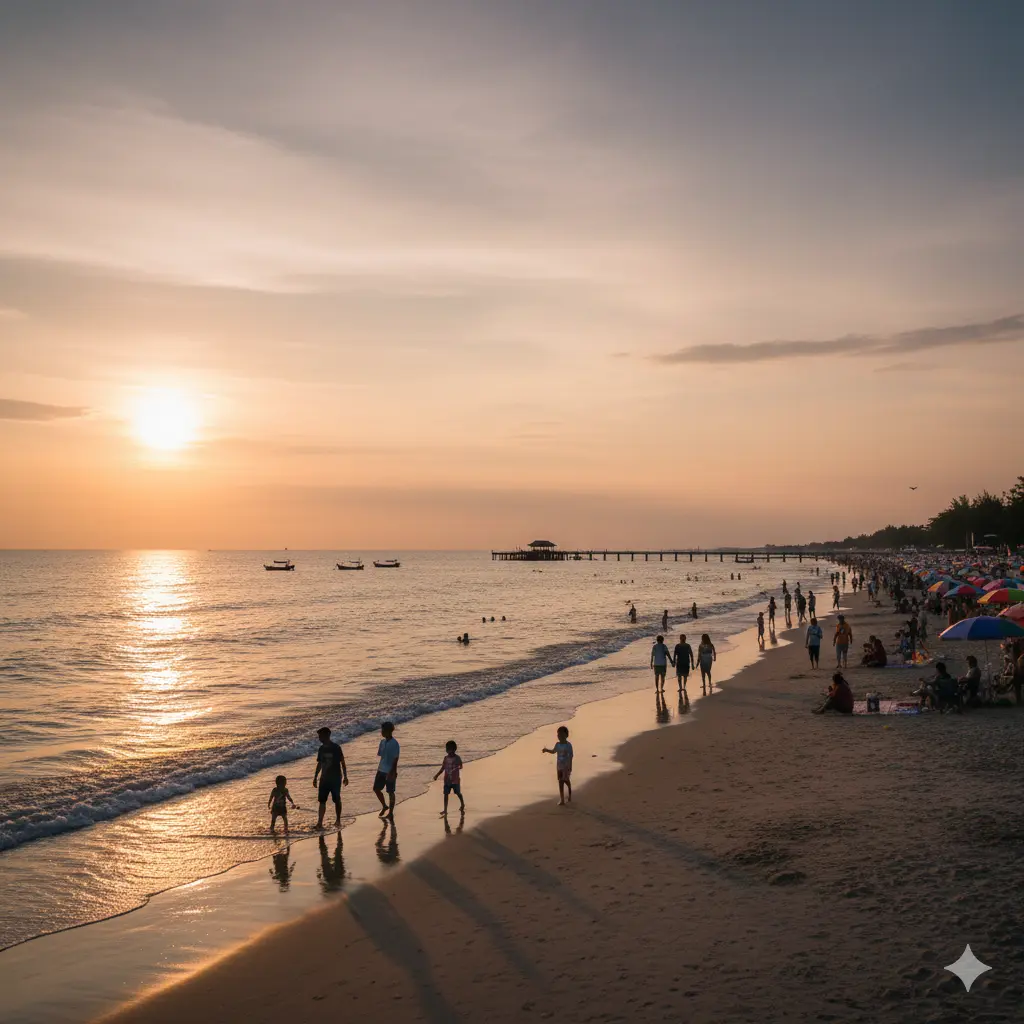
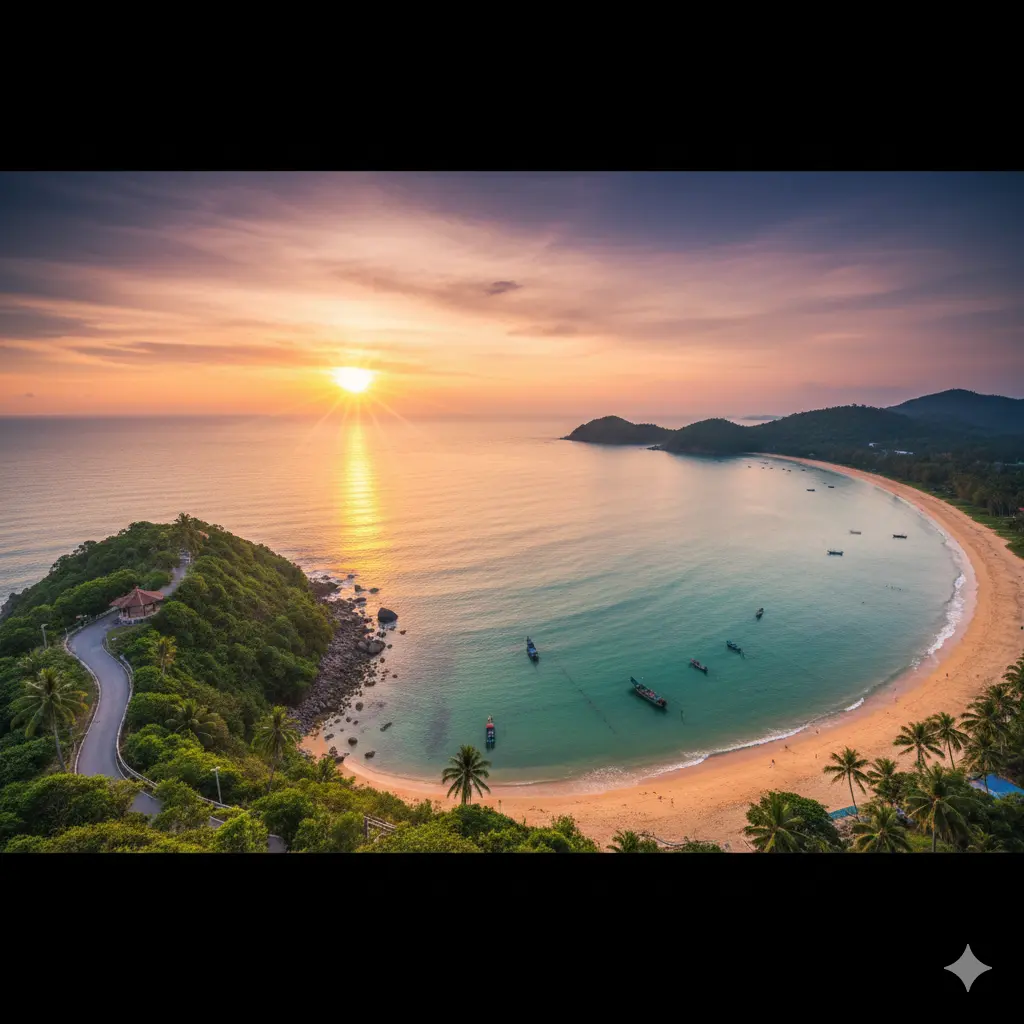
The Chalerm Burapha Chonlathit road runs for roughly 100 km along the eastern Gulf coast from Rayong towards Trat, and its most scenic stretch passes through Chanthaburi. The signature stop is Noen Nang Phaya, a clifftop bend with sweeping sea views and photo platforms. Along the way you can pause at Chao Lao beach and Kung Wiman bay for a swim or a seafood lunch. Drive it in the early morning or late afternoon for the best light.
Kung Krabaen Bay
In Tha Mai district, a royal development study centre protects a sheltered bay fringed with mangroves. A wooden nature trail of about 1.6 km runs through the forest, with information points about plants, crabs and birds, and there is a small aquarium on site. It is a pleasant, easy outing for families.
Laem Sing: Tuek Daeng and Khuk Khi Kai
At the mouth of the Chanthaburi River, the fishing town of Laem Sing preserves two reminders of the French occupation of the area between 1893 and 1904. Tuek Daeng, the “red building”, served as French headquarters, while Khuk Khi Kai is a small brick prison with an unusual history. Both are free to visit and make an interesting stop on the way to the coast.
Khao Khitchakut pilgrimage
High on a mountain in Khao Khitchakut National Park, a rock bearing a Buddha footprint draws huge crowds of Thai pilgrims during an annual festival, usually running from around January to March; in 2026 the season ended on 19 March. Many people make the steep final climb at night. It is not a sightseeing trip so much as a deeply felt religious experience, and it is very crowded on weekends. Dates are announced each year.
Fruit orchards
Chanthaburi is one of Thailand’s great fruit provinces, famous for durian, mangosteen, rambutan, longkong and salak. The peak of the season usually falls in May and June, when many orchards welcome visitors, roadside stalls overflow and the province typically holds a fruit festival. Visit then and you will taste the fruit at its freshest.
Local food to try
The dish to seek out is kuay teow phat pu, Chanthaburi’s stir-fried rice noodles with crab, made with the province’s own chewy sen chan noodles. You will also find sen chan in a local version of pad thai. Another speciality is moo chamuang, pork belly simmered with the sour leaves of the chamuang tree, which gives a gentle tang to a dark, rich curry.
Along the coast, fresh oysters and other shellfish are served with a sharp, spicy seafood sauce. And in fruit season, durian appears in everything from salads to desserts. The food here is shaped by Chinese and Vietnamese influences as well as by the indigenous Chong community, so it is worth eating your way through the waterfront snack shops and local markets.
Where to stay
- The old riverside quarter: guesthouses and small heritage stays near the Chanthaboon waterfront let you explore the old town, the cathedral and the gem market on foot.
- Chanthaburi town centre: larger hotels with parking, convenient if you are driving out to waterfalls and orchards.
- The coast: resorts around Chao Lao, Kung Wiman and the coastal road suit a slower beach stay and sunset drives.
- Orchard homestays: in fruit season, staying on or near a farm is a memorable way to experience rural Chanthaburi.
Getting there and getting around
By car: Chanthaburi town is about 250 km from Bangkok, typically a three- to four-hour drive. Many people combine it with Rayong on the way.
By bus: buses and minivans run from Bangkok’s Eastern Bus Terminal at Ekkamai and from the Mo Chit area, taking around four to five hours, and some services start at Suvarnabhumi Airport.
Getting around: the old town is walkable, but waterfalls, beaches, orchards and the coastal road are spread out and public transport to them is limited. Renting a car, or hiring a driver for a day, is by far the easiest option.
Best time to visit
From November to February the weather is dry and comfortable, ideal for the coastal road and the waterfront. March to May is hot, but the fruit season begins to ripen, reaching its peak around May and June. The rainy season from roughly June to October brings heavy downpours; waterfalls are at their most powerful, but plan indoor options and drive carefully.
Good to know
- Do not buy loose gemstones as an investment unless you are an expert or can have them independently tested.
- Dress modestly at the cathedral and at temples, and avoid visiting the cathedral during services unless you are attending.
- Do not touch or feed the protected fish at Phlio waterfall.
- During durian season, many hotels ban durian in rooms; check the rules before you bring one back.
- For the Khao Khitchakut pilgrimage, wear sturdy shoes, bring a torch and expect long queues on weekends.
In short
Chanthaburi combines a living old town, a gem trade you can watch up close, waterfalls, mangroves and some of the best fruit in Thailand. Pair it with neighbouring Rayong for an eastern-seaboard road trip, starting from Bangkok.