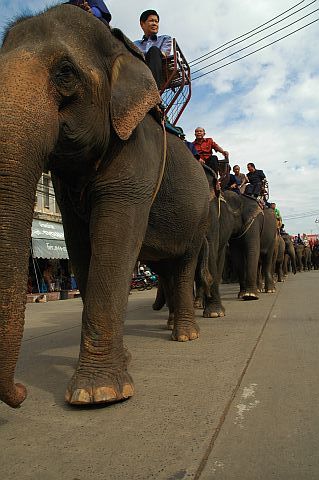
Surin is Thailand’s elephant province. The Kui people of the area have raised and trained elephants for centuries, and the yearly Elephant Round-up draws visitors from around the world. The province also has small Khmer temples, a strong Khmer-speaking culture and some of the finest silk weaving in the country.
Getting there: Surin is about 430 km from Bangkok, roughly 6 hours by car. Trains on the Northeastern Line stop at Surin station, and buses run from Mo Chit. The nearest airport with regular flights is Buri Ram, about 1.5 hours away.
Border note: Thai–Cambodian border crossings have been closed for long periods since 2025, and some temples right on the border have limited or no access. Check official announcements before planning any trip to the border area.
Top things to do in Surin
1. Ban Ta Klang Elephant Village (Elephant World)
In Tha Tum district, a Kui village where families live with their elephants. The centre has a museum, elephant shows and an elephant cemetery; choose activities that do not involve riding. Map
2. Prasat Sikhoraphum
A group of five brick towers from the Khmer period, with finely carved lintels and door guardians. Map
3. Prasat Ban Phluang
A small sandstone sanctuary on a laterite base with well-preserved carvings, in Prasat district. Map
4. Ban Tha Sawang silk village
Weavers here make complex brocade silk (pha yok) on tall looms, a craft that has supplied royal ceremonies. Map
5. Ban Khwao Sinarin
A craft village known for silver beads (prakueam) and silk; watch the work and buy direct. Map
6. Phraya Surin Phakdi Monument and the old city moat
The town’s founder stands at the centre of Surin, near the remains of the old moat. Map
7. Border temples (check access first)
The Prasat Ta Muen group and other temples sit right on the Thai–Cambodian border. Since 2025 access has been limited or closed; only visit when officials announce it is open.
Suggested itinerary
Day 1: Surin town → Phraya Surin Phakdi Monument → Ban Tha Sawang silk → Ban Khwao Sinarin → night market.
Day 2: Early drive to Ban Ta Klang → lunch → Prasat Sikhoraphum → continue to Buri Ram or Ubon Ratchathani.
Festivals and annual events
- Surin Elephant Round-up and Red Cross Fair – usually around the third weekend of November in Surin town, with a parade of elephants, a breakfast buffet for the elephants and large shows.
- Maha Songkran Chang Surin – in 2026 it ran 10–12 April, with water play alongside elephants, a silk-dress theme and evening elephant shows. See our Songkran etiquette guide.
- Silk festivals – silk fairs are often held alongside the elephant festival.
Dates change each year, so check with the province or TAT before you travel.
Travel tips
- Book hotels well ahead for the Elephant Round-up.
- Choose elephant experiences that respect animal welfare; avoid rides and tricks.
- Dress modestly at temples.
FAQ
When is the Surin Elephant Round-up?
Usually around the third weekend of November; confirm the year’s dates with TAT.
Where can I see elephants outside festival time?
At Ban Ta Klang Elephant Village in Tha Tum district.
Can I visit Prasat Ta Muen?
Access has been limited or closed since 2025; check official announcements.
What should I buy in Surin?
Silk and silver beads from the craft villages.
More to read
Cover photo: Surin round up.jpg · Marcin Nowak · CC BY 2.5 · Wikimedia Commons