Chiang Mai was founded in 1296 by King Mangrai as the capital of Lanna, the northern kingdom whose name means “a million rice fields”. More than seven centuries later, the city still blends ancient temples with a creative, modern lifestyle of cafés, galleries and night markets. Here’s a relaxed plan for a day in and around the old city, plus a mountain trip if you have more time.
Morning: Wat Phra That Doi Suthep
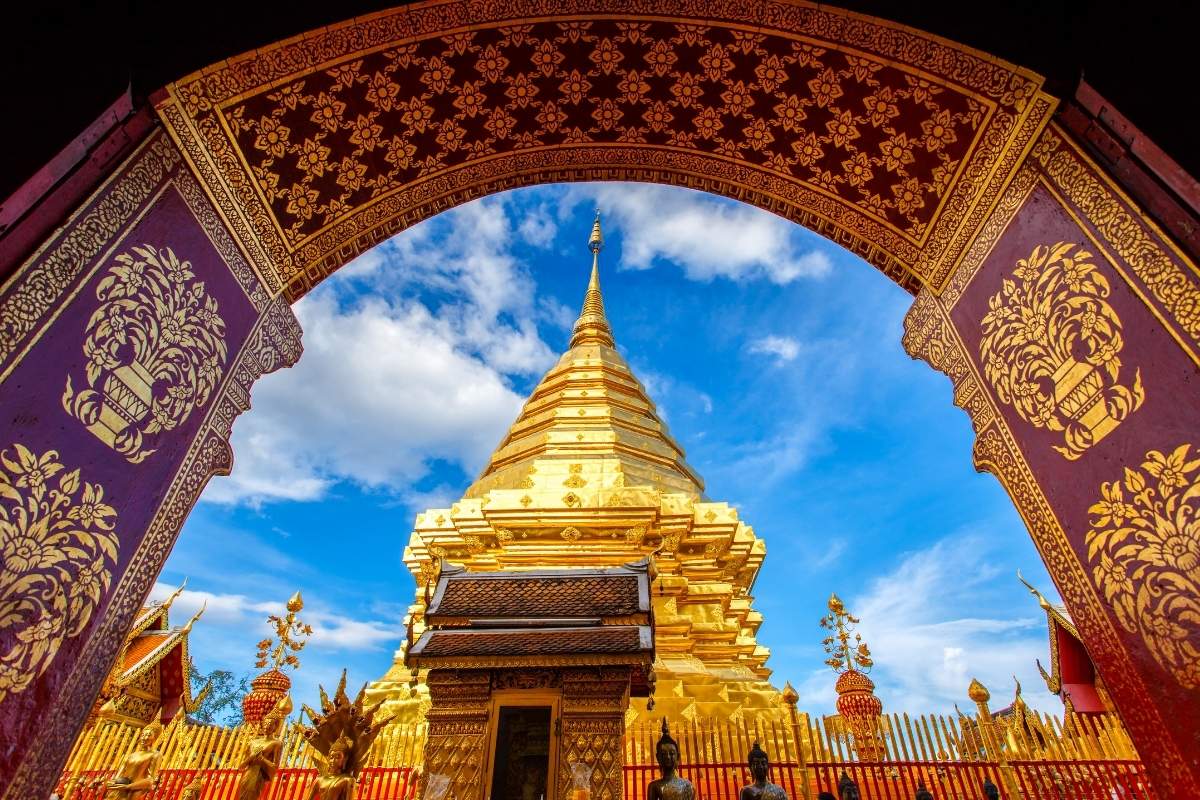
Start early with a trip up Doi Suthep, the mountain that overlooks the city. About 15 km from the centre, near the top, sits Wat Phra That Doi Suthep, one of northern Thailand’s most revered temples, with a gleaming golden chedi said to enshrine a relic of the Buddha. To reach it, climb the long staircase of around 300 steps lined with naga (serpent) balustrades, or take the lift for a small fee.
On a clear morning, the terrace offers sweeping views over Chiang Mai. Dress modestly, with shoulders and knees covered, and take off your shoes before entering the buildings. Shared red songthaew trucks and taxis can take you up the mountain.
Late morning: temples inside the old city
Back in town, the old city is a square about 1.6 km on each side, surrounded by a moat and the remains of brick walls. It’s compact enough to explore on foot or by bicycle.
Wat Chedi Luang is dominated by a massive brick chedi that once stood far taller; its upper section collapsed in an earthquake in 1545. From 1468 to 1551 it housed the Emerald Buddha, which is now in Bangkok’s Wat Phra Kaew, and the temple grounds are also home to the city pillar. A short walk away, Wat Phra Singh dates from 1345 and houses the Phra Buddha Sihing, one of the north’s most venerated Buddha images. Its graceful Lanna-style buildings are a highlight of any walk.
Afternoon: coffee in Nimman and beyond
After the temples, swap history for coffee. Nimmanhaemin Road, or “Nimman” for short, west of the old city, is lined with cafés, small boutiques and galleries. For a greener setting, head out to Mae Rim in the north or Hang Dong in the south, where garden cafés sit among rice fields and hills. You’ll need a car or a ride-hailing app to reach them.
Evening: walking streets and the Night Bazaar
Chiang Mai’s evening markets are a must. On Sundays, the famous Sunday Walking Street starts at Tha Phae Gate and runs along Ratchadamnoen Road through the old city, from around 4 pm to 10 pm; many Thais call it the Tha Phae walking street. Expect crafts, clothes, live music and plenty of northern street food, and arrive early to beat the crowds.
On Saturdays, the Wua Lai Walking Street, just south of the old city in the former silversmiths’ quarter, is a little more laid-back. On other nights, the Night Bazaar on Chang Khlan Road runs every evening, with souvenir stalls, food courts and shops.
Day trip: Doi Inthanon, Thailand’s highest peak
With an extra day, head southwest to Doi Inthanon National Park in Chom Thong district. At 2,565 m, Doi Inthanon is the highest mountain in Thailand, and its upper slopes are cloaked in cool, mossy forest. Stop at waterfalls such as Wachirathan along the way, and bring a jacket, because the summit is much colder than the city, especially in the cool season. The park is about 60 km from Chiang Mai, but with stops it makes a full day out.
When to visit (and Songkran)
The cool season, from about November to February, brings the most comfortable weather for sightseeing. Visit in mid-April and you’ll find Chiang Mai at its most festive: Songkran, the Thai New Year, is traditionally celebrated from 13 to 15 April, and the old city moat becomes the heart of good-natured water fights. Read our guide to Songkran in Chiang Mai for tips, and check the official event schedule closer to the date. For more of the city and its surroundings, browse our Chiang Mai province guide.
Good to know
- Best for: history, culture and modern city life
- Don’t miss: Wat Phra That Doi Suthep, the Sunday Walking Street and Nimmanhaemin Road
- Temple etiquette: cover shoulders and knees, remove your shoes and don’t point your feet at Buddha images
- Doi Suthep: go early for clearer views and fewer crowds
- Markets: Sunday Walking Street on Ratchadamnoen Road, Saturday on Wua Lai Road, Night Bazaar every evening
- Doi Inthanon: bring warm clothes, as the summit is far cooler than the city
- Heading into the mountains? See our guide to backpacking in Pai
In short
Chiang Mai rewards an unhurried pace: sunrise at Doi Suthep, centuries-old temples inside the moat, an afternoon of coffee in Nimman and an evening at the walking street. Add a day on Doi Inthanon and you’ll have seen both the heart of old Lanna and the roof of Thailand.