Many travellers know Chumphon only as a name on a bus timetable or the town where they catch the boat to Ko Tao. That’s a pity, because this province at the top of Thailand’s southern peninsula has long, quiet beaches, a hilltop viewpoint with sweeping sea views and offshore islands that divers rate highly. If you can spare a day or two on your way south, Chumphon rewards a slower look.
More than a stop on the way south
Chumphon is often called the gateway to the South (pratu su phak tai in Thai), because the main road and railway from Bangkok pass through it before continuing down the peninsula. Since so many people head straight through, the coast has kept a relaxed, local feel: fishing villages, palm-fringed bays and simple seafood restaurants rather than long resort strips. It suits travellers who want calm water, a few great viewpoints and a slower pace.
Hat Sai Ri Sawi: a long, peaceful beach
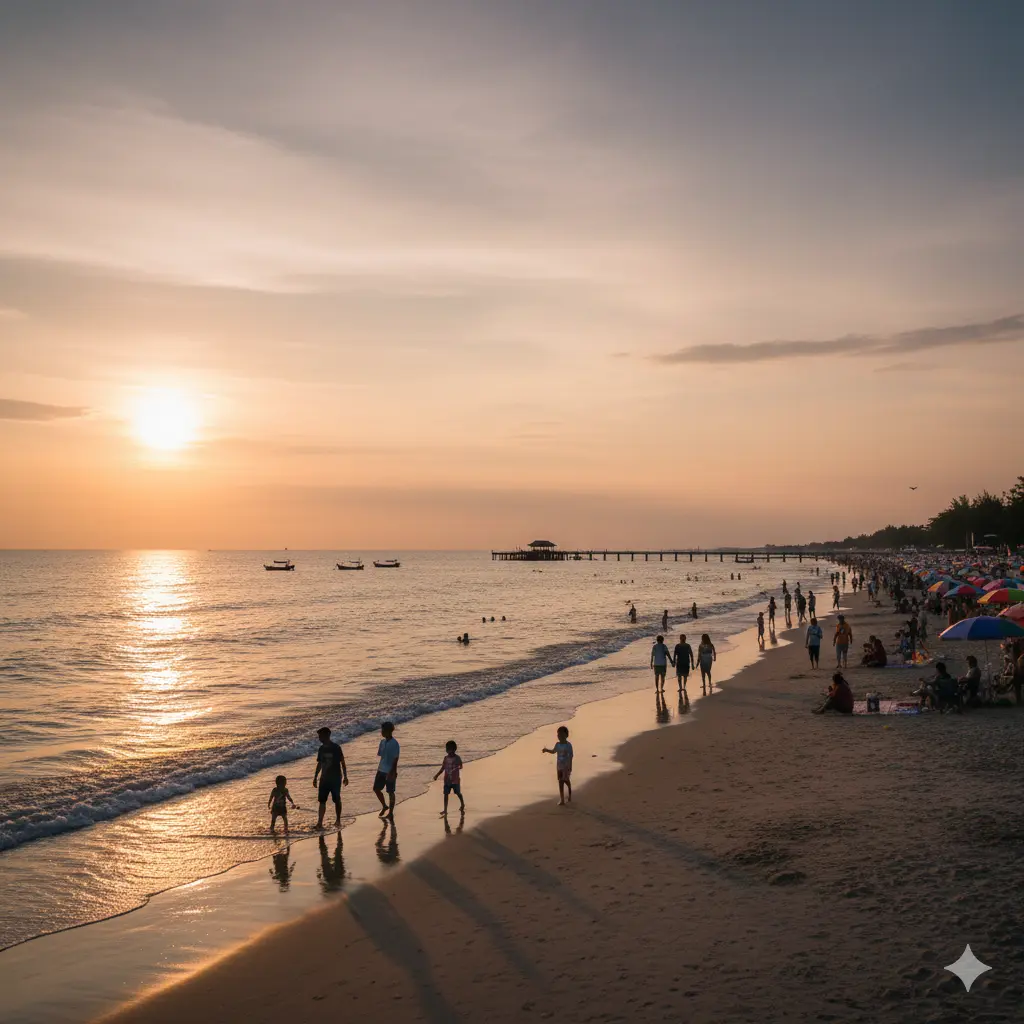
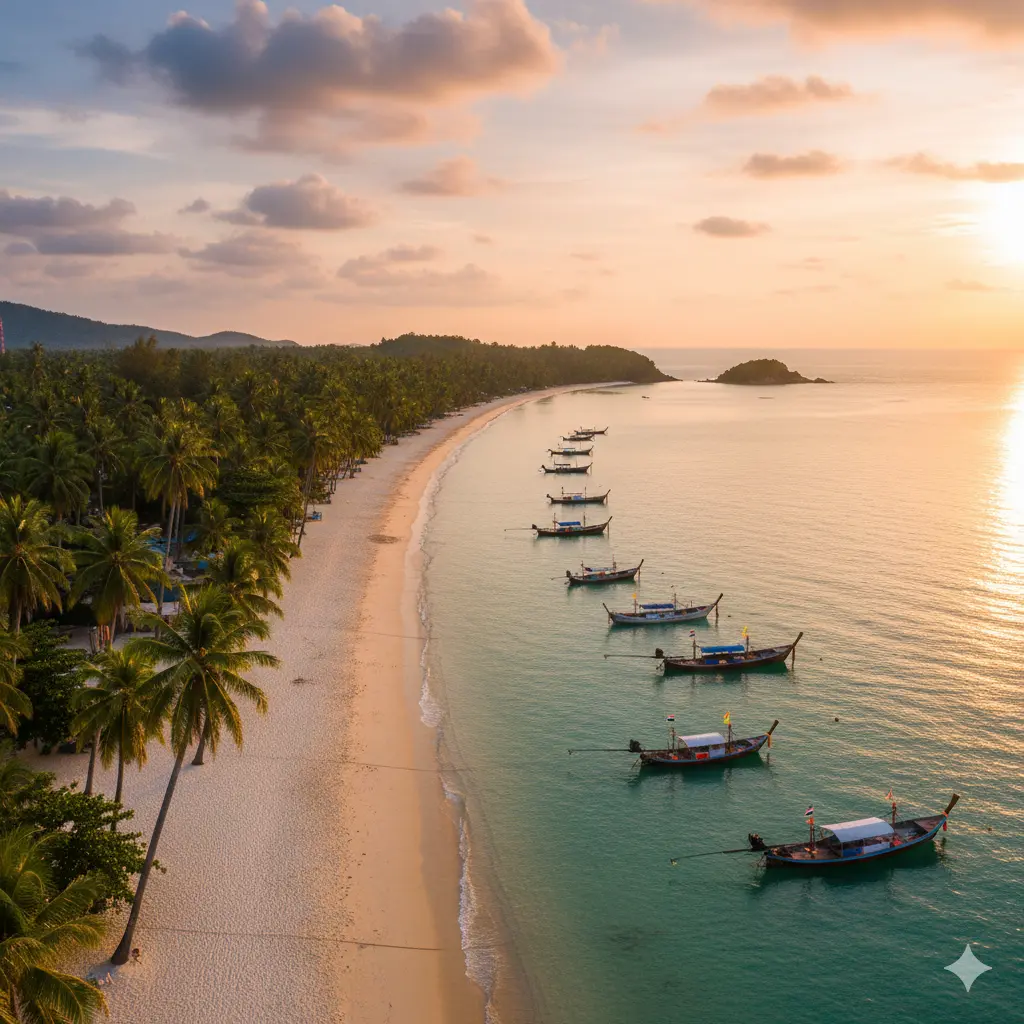
In Sawi district, south of Chumphon town, Hat Sai Ri Sawi is a wide sweep of sand backed by coconut palms, with a small fishing community nearby. The water is usually gentle and development is minimal, so expect a few food stalls and guesthouses rather than beach clubs. Mornings and late afternoons bring the softest light for a stroll along the shore, and at weekends local families come to picnic.
About 2 km away is a shrine to Krom Luang Chumphon (Prince Abhakara Kiartivongse), who is revered in Thailand as the father of the Royal Thai Navy. Don’t confuse this beach with Hat Sai Ri near Paknam Chumphon, much closer to town, where the prince’s main shrine stands beside the decommissioned warship HTMS Chumphon, now displayed as a memorial. Both shrines are active places of worship, so dress modestly when you visit.
Khao Matsee: the view over Paknam Chumphon
For the big picture, drive up Khao Matsee, a hill roughly 20 km southeast of Chumphon town. From the top you get an almost all-round panorama: beaches stretching away to the north and south, islands scattered across the sea and the fishing village of Paknam Chumphon below. A gilded statue of the bodhisattva Avalokiteshvara (known in Chinese tradition as Guan Yin) stands at the summit, and a small café lets you linger over the view.
The access road is very steep and parking at the top is limited. At busy times you may need to leave your vehicle lower down and climb a short but steep stepped path. Weekday mornings are the easiest time to go.
Diving and snorkelling around the Chumphon islands
Offshore, the islands and pinnacles of Mu Ko Chumphon National Park are the province’s underwater highlight. Sites around Ko Ngam Yai, Ko Ngam Noi and rocks such as Hin Pae draw divers for turtles, barracuda and colourful nudibranchs, and whale sharks are seen in these waters from time to time. Visibility varies, but on calm days it can be excellent.
Dive and snorkel boats mostly leave from piers on the Tha Taphao canal near Paknam Chumphon. Trips generally run from around January to October, and many operators consider March to September the best period. Book with a licensed operator, follow the national park rules and never touch coral or stand on the reef.
Local markets, seafood and coffee
Chumphon is a good place to eat like a local. Fishing villages such as Paknam Chumphon serve seafood straight off the boats, and town markets are the place to try southern Thai dishes, which tend to be spicier and richer in turmeric than central Thai cooking. Coffee is grown in the province too, so look out for cafés serving local beans. Morning markets are liveliest early, before the heat builds.
Getting there and around
Chumphon town is on the main southern railway line from Bangkok, and many travellers arrive by overnight train. Buses also run from the capital, and the province has a small domestic airport. Beaches and viewpoints are spread out, so a rental car is the easiest way to explore; hire a scooter only if you are licensed and experienced. If you’re continuing to the Andaman coast, Chumphon makes a natural break before places such as Krabi or Phuket.
Good to know
- Best for: quiet beaches, diving and snorkelling, slow travel
- Don’t miss: Khao Matsee viewpoint, Hat Sai Ri Sawi and the Mu Ko Chumphon islands
- Dive season: trips mainly run from about January to October; check sea conditions before booking
- Khao Matsee: very steep road and little parking at the top, so avoid peak weekend times
- Shrines: dress modestly and behave respectfully at the Krom Luang Chumphon shrines
- Cash: small beach stalls usually accept cash only
- Closer to Bangkok? For a shorter beach trip, compare Rayong and Ko Samet
In short
Chumphon is easy to overlook, but its calm beaches, sweeping hilltop view and island diving make it far more than a transit town. Give it a night or two on your way south and you’ll see a gentler, more local side of Thailand’s Gulf coast.