Chiang Mai has a reputation as one of the best places in Thailand to spend Songkran, and it is easy to see why. The northern capital pairs a famous water fight, played out around the moat of its old walled city, with traditions that are distinctly its own. Here the festival is known as Pi Mai Mueang, the Lanna New Year, after the northern kingdom that was centred on Chiang Mai for centuries. Expect processions, temple courtyards dotted with sand stupas and fluttering paper flags, and locals in northern-style cotton clothes, alongside days of gleeful splashing. This guide explains what each day means, where the action usually happens and how to plan your visit.
Pi Mai Mueang: Songkran the northern way
Across Thailand, Songkran marks the traditional New Year, with the national holiday on 13 to 15 April (Tuesday to Thursday in 2027). In the north, the festival keeps older Lanna customs alive. Families clean their homes, visit temples, carry sand into temple grounds and honour their elders with scented water, and many people dress in traditional handwoven cotton for the occasion. The celebration was once spread over more days than it is now; today it largely follows the national holiday, although Chiang Mai’s cultural programme has in recent years begun several days before 13 April and continued for a few days afterwards.
UNESCO inscribed Songkran as intangible cultural heritage in December 2023, and Chiang Mai shows why: the water fight is only the most visible part of a much richer festival.
What each day means in the Lanna tradition
Northern Thais give each day of the New Year its own name and purpose. In most years they line up with the dates below, although the Lanna almanac can occasionally shift them by a day.
Wan Sangkhan Long (usually 13 April)
The day the old year leaves. Folk belief pictures an old figure known as Grandfather Sangkhan, sometimes accompanied by a grandmother, drifting away down the river and taking the past year’s bad luck with him. People clean their houses, wash clothes and bathe, sometimes with water blessed with herbs, so they can start the new year fresh.
Wan Nao (usually 14 April)
The ‘in-between’ day, belonging to neither the old year nor the new. It is a day to watch your words: arguing, cursing or speaking unkindly is believed to bring bad luck for the rest of the year. Families shop and cook for the next day’s offerings, and this is the traditional day for carrying sand into temples and building sand stupas.
Wan Phaya Wan (usually 15 April)
The first day of the new year proper, and the most important. People rise early to give alms to monks, decorate sand stupas with colourful flags, bathe Buddha images and, later in the day, visit elders for dam hua, the northern ceremony of pouring scented water over a respected person’s hands to ask forgiveness and receive blessings.
Wan Pak Pi (usually 16 April)
The name means the ‘mouth’ or opening of the year. Customs vary between families and communities; one well-known northern tradition is to share a curry made with young jackfruit, eaten for good fortune in the year ahead.
Water fights around the moat and Tha Phae Gate
Chiang Mai’s old city is a square ringed by a moat, and during Songkran the roads along the water become one long, slow-moving water fight. Locals line the banks with buckets, pickup trucks loaded with water barrels crawl around the circuit, and pedestrians are fair game, so assume you will be soaked the moment you step out anywhere near the old city.
The busiest point is usually around Tha Phae Gate, the restored brick gateway on the eastern side, where stages, music and organised activities have been set up in recent years. For an evening crowd with more of a party feel, the area around Nimmanhaemin Road, north-west of the old city, has also hosted concerts and water play.
Much of the water used around the moat is scooped straight out of it. The city typically checks the water quality before the festival, but it is not drinking water: keep your mouth closed, protect your eyes and rinse off when you get back to your room. Alcohol restrictions have applied in the moat-side play area in recent years. Traffic around the old city can grind to a halt, so walking, or riding a red songthaew (shared pickup taxi) for part of the way, is usually quicker than a car.
The Phra Phuttha Sihing procession
The spiritual centrepiece of Chiang Mai’s Songkran is the procession of Phra Phuttha Sihing, one of the most revered Buddha images in northern Thailand, which normally resides at Wat Phra Singh in the old city. In recent years it has been carried through the streets on 13 April on an ornate float, accompanied by musicians, people in traditional dress and important images from other temples in the city. Spectators line the route to pour scented water, often mixed with flowers and herbs, gently over the images as they pass, a gesture believed to bring good fortune for the new year.
Afterwards the image is displayed at Wat Phra Singh so that people can continue to bathe it over the festival days. The route and start time have varied from year to year, so check the Chiang Mai municipality’s programme before you go. This is the moment to put the water gun away: use a small bowl, pour softly and keep out of the procession’s path.
Sand stupas, tung flags and temple visits
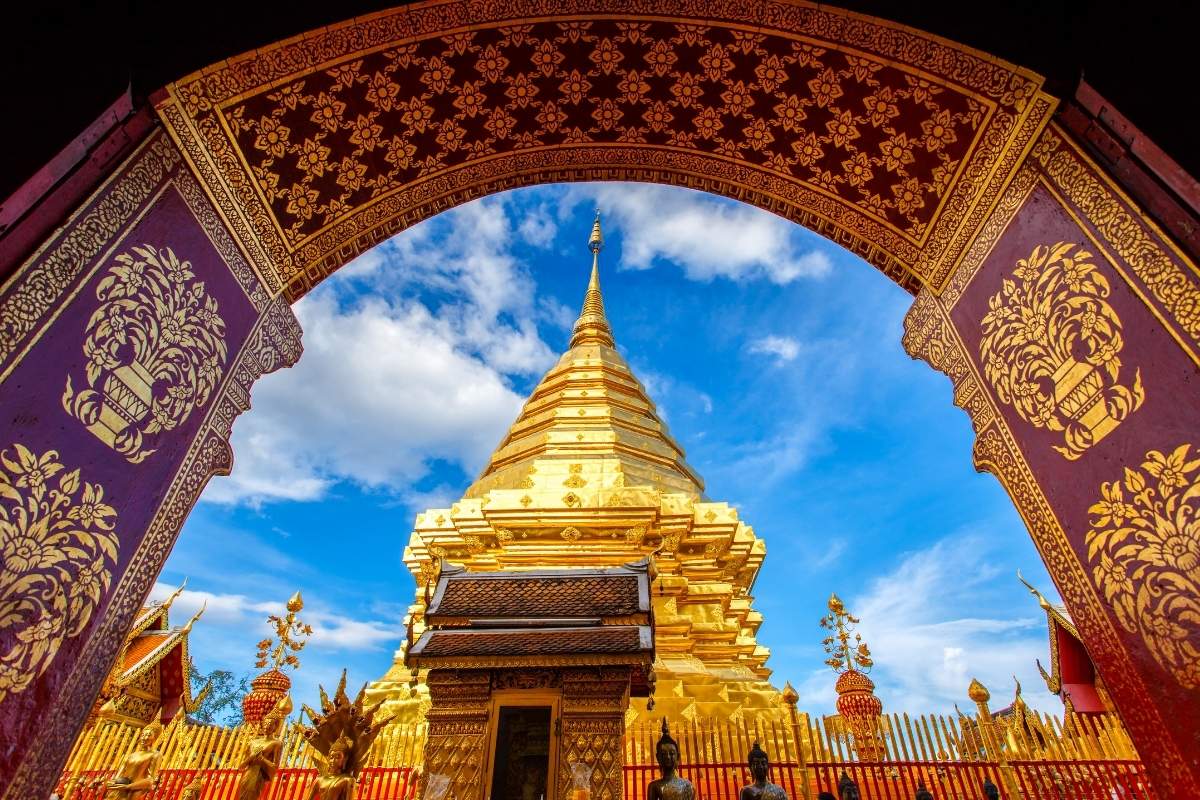
Walk into almost any temple compound around Songkran and you will see small mounds of sand shaped into stupas, known as chedi sai, topped with tung, long flags of paper or cloth in bright colours. The custom has a practical side: northern temple grounds were traditionally covered in sand, and worshippers who carried a little away on their feet during the year bring fresh sand back to repay it. It has a spiritual side too, because building a stupa, however small, is a way of making merit.
Good places to see these traditions include Wat Phra Singh, Wat Chedi Luang with its huge ruined chedi, and neighbouring Wat Phan Tao with its old teak hall, which has hosted sand stupa building during the festival. Visitors are welcome to watch, and at many temples you can join in by adding sand or a flag. Our guide to Chiang Mai’s old city covers these temples and how to fit them into a day.
Practical tips for Songkran in Chiang Mai
Book early. Chiang Mai is one of the most popular Songkran destinations for Thai and foreign travellers alike, and rooms in and around the old city fill up well ahead. Flights, trains and buses from Bangkok also get busy around the holiday.
Choose your base. Staying inside the moat puts you in the heart of the action, which is ideal if you want to play all day and less so if you need to come and go dry. A hotel a little outside the old city gives you a calmer retreat.
Plan around the heat and the air. April is hot in the north, and late in the dry season air quality can be poor because of burning in the region. Check the air quality index each morning, drink plenty of water and take a long midday break.
Keep valuables sealed. Waterproof pouches are sold everywhere during the festival, but bring your own so you are covered from the start.
Take a breather. If you need a day away from the water, an early trip up to Wat Phra That Doi Suthep or a drive into the hills makes a calm contrast. For more ideas, see our Chiang Mai travel guide, and for the dos and don’ts of the water fight itself, read our Songkran etiquette and survival guide.
Good to know
- Local name: Pi Mai Mueang, the Lanna New Year.
- National holiday: 13–15 April; Chiang Mai’s cultural programme usually stretches over a longer period.
- Main water zone: the roads around the old city moat, especially near Tha Phae Gate.
- Procession: Phra Phuttha Sihing, usually on 13 April; route and times are confirmed each year.
- Temple customs: carrying sand, building chedi sai, tung flags and dam hua for elders.
- Moat water: fine for splashing, never for drinking.
- Help: Tourist Police 1155; medical emergencies 1669.
The bottom line: Chiang Mai rewards visitors who look beyond the water fight. Spend a morning at the temples watching sand stupas take shape, catch the Phra Phuttha Sihing procession, then join the crowds by the moat in the afternoon. Check the year’s official programme close to the date and book well ahead, and you will see why so many people choose Chiang Mai to welcome the new year.